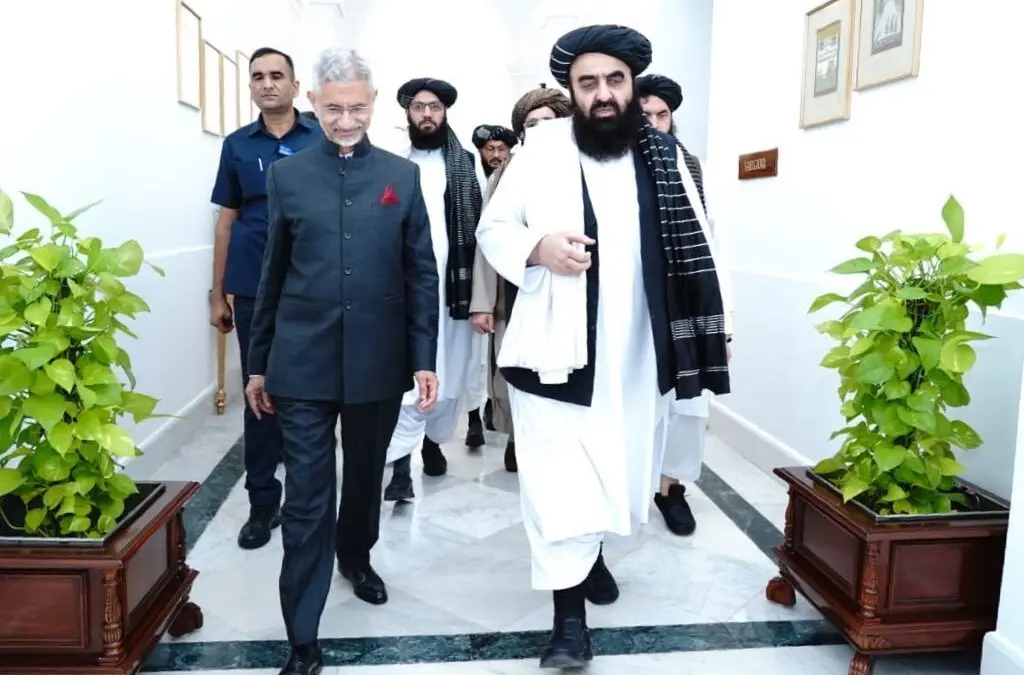
Islamabad: Pakistan on Sunday lodged a strong diplomatic protest against the joint statement issued by India and Afghanistan, objecting to references to Jammu and Kashmir and remarks made by Afghanistan’s acting Foreign Minister Amir Khan Muttaqi during his New Delhi visit.
In a statement, Pakistan’s Foreign Office said it had “strong reservations” over the mention of Jammu and Kashmir as part of India in the joint declaration, calling it a violation of United Nations Security Council resolutions and the disputed region’s “internationally recognised” status.
“The reference to Jammu and Kashmir is not only legally untenable but also highly insensitive to the sacrifices and sentiments of the Kashmiri people,” the Foreign Office said, describing the move as “an attempt to distort historical facts.”
The joint statement, issued after the India-Afghanistan foreign ministers’ meeting in New Delhi earlier this week, thanked Kabul for its “unequivocal condemnation” of the April 22 terror attack in Pahalgam, Jammu and Kashmir, which killed 26 people. It also stressed that both countries “condemn all forms of terrorism emanating from regional countries,” a veiled reference widely interpreted as pointing towards Pakistan.
The remarks triggered sharp criticism in Islamabad, which said the declaration ignored “ground realities” and amounted to “political point-scoring.”
Pakistan also hit out at Amir Khan Muttaqi’s comments made in Delhi, in which he said terrorism was “solely Pakistan’s internal problem” and denied that Afghan soil was being used for attacks across the border. Islamabad rejected his assertion, saying it had repeatedly shared evidence of “terrorist outfits operating from Afghan territory with support from certain elements within Afghanistan.”
“Such statements are contrary to facts and do not help the cause of regional peace,” Pakistan’s Foreign Office said, adding that Afghanistan must ensure its soil is not used against neighbouring countries.
Muttaqi, who led the first high-level Taliban delegation to India since the group seized power in 2021, had called for stronger trade ties and regional cooperation while insisting that Kabul sought “friendly relations with all neighbouring countries.”
India and Afghanistan, in their joint statement, reaffirmed their commitment to fight terrorism and promote regional stability through economic and people-to-people partnerships.
The diplomatic row now threatens to complicate already fraught relations among the three countries, with Pakistan accusing both New Delhi and Kabul of “ganging up” to undermine its position on Kashmir.