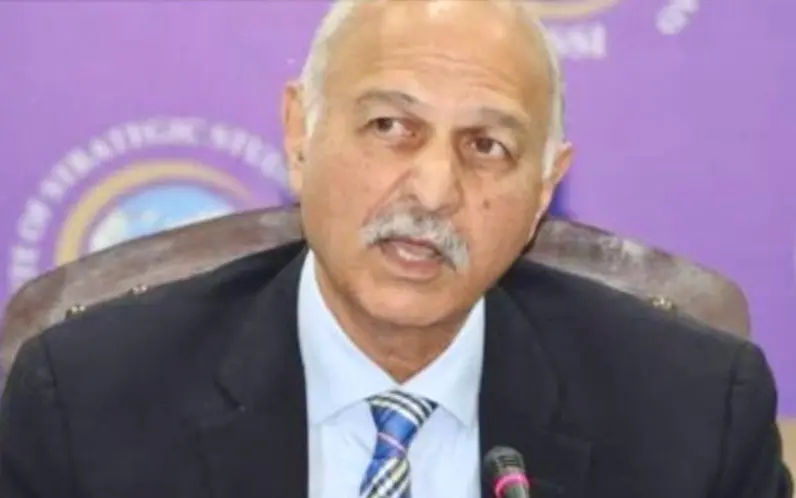
Islamabad: Pakistani senator Mushahid Hussain courted controversy by offering “brotherly advice” to the United Arab Emirates (UAE) regarding the country’s demographics and its warming relationship with India.
During an interview to Dunya TV, Hussain pointed to the large Indian expatriate population in the UAE as a potential long-term threat to the country’s sovereignty.
“Your population is 10 million; out of that, 4.3 million are from India,” Hussain said. “Pay attention that the friendly ties with them do not land you up as part of Akhand Bharat,” ANI reported.
Pakistan is unhappy after UAE demanded repayment of the $3.5 billion in loans. While Islamabad has indicated that the payment will be made by the end of this month, Hussain claimed that the repayment is not a financial obligation, but an act of “brotherly rescue” for a nation he claims is currently “stuck and helpless.”
Pakistan has a moral responsibility to support the UAE during what the senator described as its time of crisis. Dismissing critics of the repayment, he asserted that Pakistan is stepping up to help a brother in need. He also highlighted the historical role Pakistan played in the UAE’s foundation, dating back to the era of Sheikh Zayed bin Sultan Al Nahyan.
“Pakistan took the right decision. Our UAE brothers are in need and helpless. We took loans from them and are repaying them in times of crisis. We have always helped them. Pakistan played an important role in building the UAE. We trained their armed forces. We have good relations since the time of Sheikh Zayed bin Sultan Al Nahyan (the founding father and first president of the United Arab Emirates),” Hussain said.
To justify his des
cription of the UAE’s “crisis,” the Pakistani politician pointed to massive financial outflows and regional instability: The UAE gave $150 billion (Dedh Kharab) to US president Donald Trump, implying a significant drain on their reserves.
“They are stuck and helpless now. They gave US President Donald Trump USD 150 billion. They are also stuck in wars in Yemen and Sudan. It’s our responsibility to help them,” said Hussain.
Through his statement of “Pakistan helping a struggling friend”, Hussain appears to be attempting to flip the narrative from one of Pakistani economic weakness to one of the country’s moral and historical superiority.
An official had recently told Dawn that repayment of the loan is a matter of “national dignity”, emphasising that it takes precedence over potential financial strain.
“The amount will be returned as soon as possible,” the official added, highlighting that “national dignity could not be compromised for financial considerations.”
The funds in question were part of external financial assistance provided in 2019 through the Abu Dhabi Fund for Development, aimed at stabilising Pakistan’s balance of payments.
According to reports, Abu Dhabi has requested immediate settlement, prompting Islamabad to expedite the repayment process despite potential domestic economic consequences.
Pakistan is currently participating in an International Monetary Fund (IMF) programme that requires it to secure approximately USD 12.5 billion in rollovers from key international partners, including China, Saudi Arabia, and the UAE. These funds are crucial to maintaining adequate reserve levels and meeting ongoing external financing obligations.
Current figures place Pakistan’s central bank reserves at around USD 16.3 billion. Repaying USD 3.5 billion could reduce these reserves by nearly 18 per cent, significantly weakening the country’s external buffer and import cover. Officials acknowledged the strain, according to Dawn, but stressed that the repayment decision aligns with bilateral considerations and the UAE’s insistence on timely settlement.