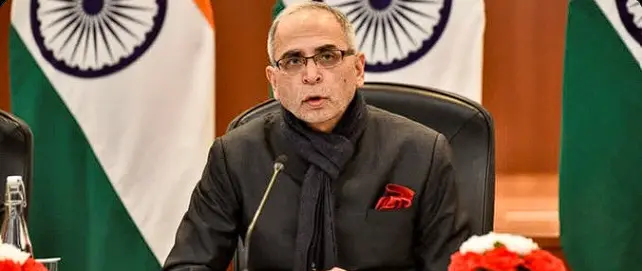
Washington: The Indus Waters Treaty was framed “in a spirit of goodwill and friendship,” but Pakistan spent decades eroding that foundation, India’s ambassador to the US Vinay Mohan Kwatra has said, PTI reported.
In an article published in Newsweek magazine, Kwatra said India’s decision to keep the Indus Waters Treaty (IWT) on hold was not a departure from the treaty’s intent, but a recognition of what Pakistan’s conduct had already undone.
His remarks came days after Pakistan hosted a conference to protest India’s decision to place the IWT in abeyance on April 23 last year, a day after Pakistan-trained terrorists killed 26 people, mostly tourists, in Pahalgam in Jammu and Kashmir.
“It is worth remembering that the treaty’s preamble declares it was concluded ‘in a spirit of goodwill and friendship’. Pakistan spent half a century dismantling that goodwill and friendship. The abeyance merely acknowledges what Pakistan’s conduct had already destroyed,” Kwatra said.
Signed in 1960, the treaty gave India control over three of the six Indus basin rivers, which carry around 20 per cent of the basin’s water, while Pakistan received rights over rivers carrying about 80 per cent.
“That asymmetry stifled development for decades in Indian regions that could have benefited from better water rights. India honoured the treaty anyway,” the envoy said.
He said Pakistan’s response over the years had included wars against India in 1965, 1971 and 1999, besides persistent hostility and cross-border terrorism, citing the Parliament attack in 2001, the Mumbai attacks in 2008, the Uri and Pathankot attacks in 2016, the Pulwama attack in 2019 and the Pahalgam attack in 2025.
If Pakistan genuinely wants India’s cooperation on bilateral issues, Kwatra said, it must first dismantle the terror infrastructure it has built over the years.
He added that obstruction and bureaucratic delays had been Pakistan’s main response to India’s project proposals under the treaty.
“Pakistan also consistently blocked India’s initiatives to renegotiate the treaty in light of six decades of technological change, which would have let India develop its hydropower potential,” Kwatra said.
“Bit by bit, Pakistan eroded India’s faith that it could exercise its rights under the treaty, or hope for a better one suited to today’s realities,” he said.
Those who still argue for talks between India and Pakistan, he said, have either ignored this history or believe that repeating the same approach will somehow deliver a different result.
“Prime Minister Narendra Modi has clearly voiced India’s stand today: ‘Terror and talks cannot go together… Terror and trade cannot go together… Water and blood cannot flow together’,” Kwatra said.
He said Pakistan’s water scarcity stemmed from mismanagement by the government in Islamabad, not India’s actions.
“…the Government of Pakistan would do better to fix its dismal water productivity, than to stage conferences blaming India and issuing threats,” Kwatra said, adding that the habit of blaming India for domestic failures had grown stale.
“The world should say so, unequivocally,” he added.