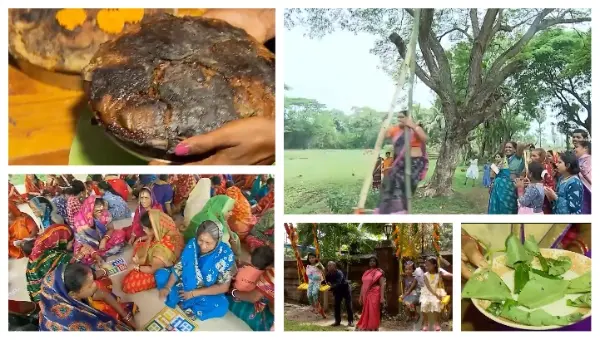
Bhubaneswar: ‘Banaste Dakila Gaja….Barasaku Thare Asichi Raja…Asichi Raja Lo Gheni Nua Sajabaja’ will echo across Odisha from Sunday, ushering in the much-awaited three-day Raja festivities.
One of the state’s most beloved traditions, Raja Parba will transform Odisha into a vibrant celebration of fertility and the divine feminine. The three days — Pahili Raja, Raja Sankranti, and Bhuin Daaha (also known as Sesa Raja) — are observed with great enthusiasm and reverence.
A Unique Global Tradition
Known as Raja Parba, this distinctive festival stands out for honouring menstruation not only in temple rituals but as a joyful, community-wide celebration. While parallels exist — such as Assam’s Ambubachi Mela, which venerates the menstruating goddess, and similar observances in parts of Nepal and indigenous cultures — Raja is remarkable for its widespread regional participation in revering feminine power and the Earth’s natural cycles.
Honouring Mother Earth
At the heart of the festival lies the belief that Mother Earth — revered as Bhudevi, the consort of Lord Jagannath — undergoes her annual menstrual cycle. For three days, all agricultural activities come to a respectful halt. Fields remain untouched, with no ploughing, digging, or disturbance to the soil. This practice symbolises rest and renewal ahead of the monsoon, reflecting deep indigenous ecological wisdom that promotes sustainable agriculture through harmony with nature.
Joyful Celebrations and Traditions
The festivities are marked by infectious enthusiasm and rich cultural expressions. Young girls don new clothes, adorn their foreheads with fragrant chandan cheeta, apply alta on their feet, and wear glittering silver anklets. They swing under sprawling banyan and mango trees while singing melodious Raja songs. During these days, girls avoid walking barefoot and instead use traditional footwear made of banana stalks or areca nut shells.
Several restrictions are observed: no kitchen work, sweeping floors, combing hair, or walking barefoot.
Families feast on special delicacies like Poda Pitha, while women are encouraged to rest from daily household chores, allowing the community to celebrate womanhood with dignity and affection.
Across Bhubaneswar and Cuttack, residential societies have installed decorative swings, organised mehndi competitions and planned cultural programmes to mark the three-day festival.
Culinary Initiatives
In Bhubaneswar, Deputy Chief Minister Pravati Parida flagged off the innovative ‘Pitha On Wheel’ initiative. The programme brings authentic Raja pithas directly to urban residents through mobile food vans, promoting Odisha’s rich culinary heritage while supporting local women entrepreneurs and self-help groups.Eating paan (betel leaf) during these three days has become almost ritualistic, with vendors offering specially flavoured varieties crafted for the occasion.
Several hotels in the twin cities have introduced special Raja menus featuring traditional Odia delicacies, from poda, manda and arisa pitha, and kakara to dalma, santula and chhena-based desserts.
A Timeless Cultural Message
Long before modern menstrual awareness campaigns, Raja Parba has celebrated menstruation for centuries as a sacred symbol of fertility, regeneration, and life — rather than a source of shame. In doing so, it honours both women and the Earth, offering a powerful counter-narrative to persistent menstrual taboos.As the festival unfolds across Odisha, Raja Parba serves as a beautiful reminder that true progress often lies in cherishing and preserving ancient wisdom. It nurtures cultural pride while reinforcing a timeless message of respect for nature’s rhythms and the divine feminine.
Greetings
President Droupadi Murmu extended warm greetings to the people of Odisha and the nation on the occasion of Raja, wishing everyone peace, prosperity, and happiness. “This inviting festival of the monsoon season is celebrated to honor the earth, the mother, and the clouds. Within the festivities of pithas, betel leaves, and swing games, Raja reminds us to live in harmony with nature. I hope that this special essence of the Raja festival will inspire us to dedicate ourselves to nation-building. On this Raja occasion, I wish for the happiness, peace, and prosperity of the people of the state as well as the country.”
Governor of Odisha — Dr. Hari Babu Kambhampati – “The agrarian harvest festival is the great festival of Odisha’s culture, nature, progress, and tradition. The message of environmental protection is embedded in this festival. Along with highlighting the majesty of Mother Earth, this festival strengthens brotherhood, friendship, and goodwill. On the occasion of this jubilant harvest festival, I extend my best wishes and congratulations to the brothers and sisters of Odisha.”
Chief Minister Mohan Charan Majhi emphasised the significance of preserving generational traditions. “Raja is not merely an announcement of the changing seasonal cycle; it is a grand cultural purification of our eternal consciousness, an unparalleled expression of gratitude toward nature and profound respect for womanhood. This tradition, by elevating the sanctity of womanhood, the power of creation, and the dignity of motherhood to the highest pedestal, has established the pride of the Odia race at a distinct elevation.”
ପ୍ରିୟ ଓଡ଼ିଶାବାସୀ, ଭାଇ ଓ ଭଉଣୀମାନେ,
ଓଡ଼ିଆ ଅସ୍ମିତାର ଜୀବନ୍ତ ପରମ୍ପରା, ମୃତ୍ତିକା ଓ ମାତୃଶକ୍ତିର ଅନନ୍ୟ ମହାମିଳନର ମହାଗଣପର୍ବ ‘ରଜ’ ଅବସରରେ ଆପଣ ସମସ୍ତଙ୍କୁ ମୋର ଆନ୍ତରିକ ଅଭିନନ୍ଦନ ଓ ଶୁଭେଚ୍ଛା।
ରଜ କେବଳ ପରିବର୍ତ୍ତିତ ଋତୁଚକ୍ରର ଆବାହନୀ ନୁହେଁ; ଏହା ଆମ ସନାତନ ଚେତନାର ଏକ ମହାନ ସାଂସ୍କୃତିକ ସଂସ୍କାର, ପ୍ରକୃତି ପ୍ରତି… pic.twitter.com/5UGLXYe5BG
— Mohan Charan Majhi (@MohanMOdisha) June 14, 2026
Former Chief Minister & Leader of Opposition — Naveen Patnaik – “Heartfelt greetings and congratulations to all on the occasion of Odisha’s festival of the people. This unique culture and tradition is a symbol of our respect for nature. May this occasion of joy and celebration fill everyone’s life with happiness and prosperity.”