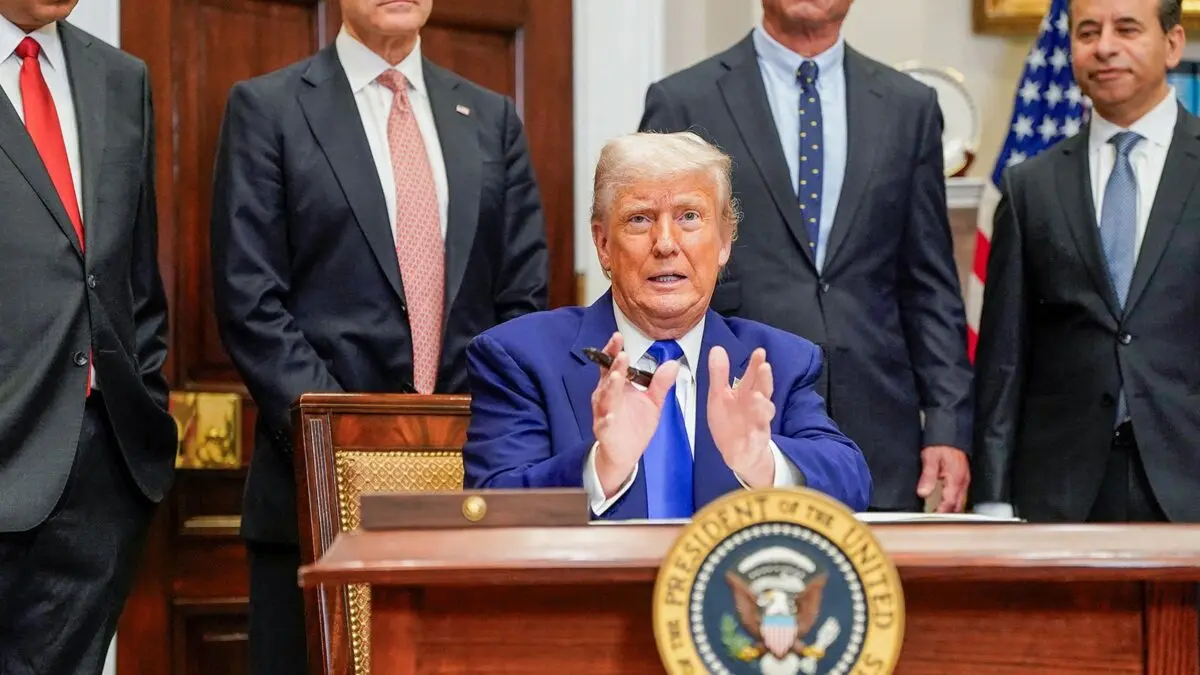
Washington: The United States government has significantly expanded its travel restrictions, adding multiple countries to the list of those whose citizens face bans or severe limitations on entry to the United States. The move, part of an ongoing national security strategy, brings the total number of affected nations to around 39 to 40, with the updated measures set to take effect from January 1, 2026, the White House said.
“President Donald J. Trump signed a Proclamation expanding and strengthening entry restrictions on nationals from countries with demonstrated, persistent, and severe deficiencies in screening, vetting, and information-sharing to protect the Nation from national security and public safety threats,” reads a statement from the White House.
➡️ The Proclamation continues full restrictions & entry limitations of nationals from the original 12 high-risk countries established under Proclamation 10949: Afghanistan, Burma, Chad, Republic of the Congo, Equatorial Guinea, Eritrea, Haiti, Iran, Libya, Somalia, Sudan, &…
— The White House (@WhiteHouse) December 16, 2025
Countries Facing Full Travel Ban
The updated order completely bars entry — for most categories of visitors — to nationals of several countries, including:
Burkina Faso
Mali
Niger
South Sudan
Syria
“The Proclamation continues the full restrictions and entry limitations of nationals from the original 12 high-risk countries established under Proclamation 10949: Afghanistan, Burma, Chad, Republic of the Congo, Equatorial Guinea, Eritrea, Haiti, Iran, Libya, Somalia, Sudan, and Yemen,” the White House statement adds.
Citizens of these countries will be unable to enter the US under most visa categories unless they qualify for very limited exemptions.
The expanded ban also uniquely includes holders of Palestinian Authority travel documents, who are now fully barred from entering the United States.
“It imposes full restrictions and entry limitations on 2 countries that were previously subject to partial restrictions: Laos and Sierra Leone,” the White House statement reads.
Partial restrictions: The Proclamation continues partial restrictions of nationals from 4 of the 7 original high-risk countries: Burundi, Cuba, Togo, and Venezuela.
Non-immigrant relief for Turkmenistan: “Because Turkmenistan has engaged productively with the United States and demonstrated significant progress since the previous Proclamation, this new Proclamation lifts the ban on its nonimmigrant visas, while maintaining the suspension of entry for Turkmen nationals as immigrants,” the White House said.
Partial restrictions and entry limitations on 15 additional countries: Angola, Antigua and Barbuda, Benin, Cote d’Ivoire, Dominica, Gabon, The Gambia, Malawi, Mauritania, Nigeria, Senegal, Tanzania, Tonga, Zambia, and Zimbabwe.
Exemption: The Proclamation includes exceptions for lawful permanent residents, existing visa holders, certain visa categories like athletes and diplomats, and individuals whose entry serves US national interests. “The Proclamation narrows broad family-based immigrant visa carve-outs that carry demonstrated fraud risks, while preserving case-by-case waivers,” the White House states.
Why travel restrictions have been imposed? “The restrictions and limitations imposed by the Proclamation are necessary to prevent the entry of foreign nationals about whom the United States lacks sufficient information to assess the risks they pose, garner cooperation from foreign governments, enforce our immigration laws, and advance other important foreign policy, national security, and counterterrorism objectives,” the White House said.