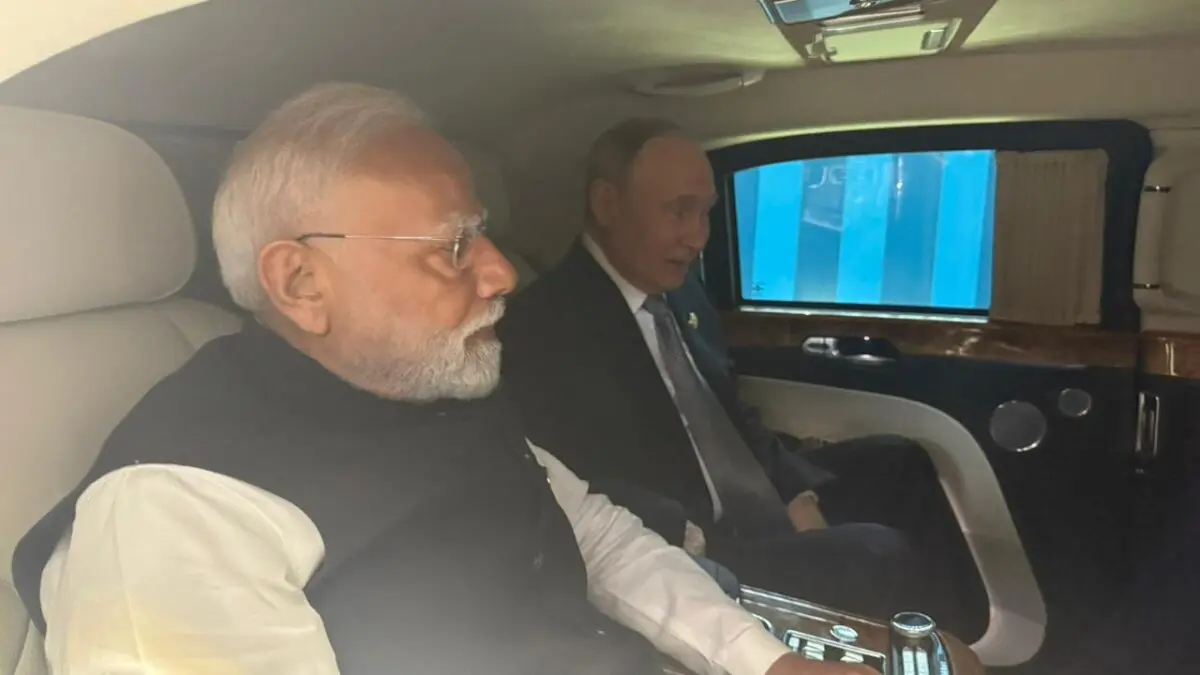
New Delhi: As leaders from New Delhi and Moscow prepare to meet, the upcoming India–Russia Summit is poised to deliver a slew of significant policy outcomes spanning defence, energy, trade, and strategic cooperation — all unfolding against a backdrop of global geopolitical tension. President Vladimir Putin is expected to visit India on December 4 and 5, 2025.
Defence and security: Strengthening India’s Strategic Posture
One of the summit’s central axes is military cooperation. India is expected to finalise orders for additional air-defence capabilities — especially more units of the S-400 missile system, which have recently proved their mettle.
Discussions may also broach deals for long-range missiles to upgrade India’s existing Sukhoi fleet — as well as possible talks on the next-generation Su-57 fighter jet and even future-oriented systems such as the S-500 missile defence system.
Moreover, there are expectations of greater Russia-India collaboration in defence manufacturing and maintenance: Russia might offer more access to spares, faster deliveries, and even technology transfers — possibly paving the way for joint manufacturing or domestic servicing hubs in India.
Energy, Resources and Civil-Nuclear Cooperation
Energy remains a major pillar of the bilateral partnership. Although Western sanctions against Russian oil firms have complicated direct supply routes, both sides are likely to explore alternative arrangements — including supplies via non-sanctioned intermediaries — to keep oil and other critical energy flows running.
Beyond oil, the summit may see agreements covering resources vital to India’s industrial and agricultural sectors — such as coking coal, fertilisers, and other critical minerals. Talks for establishing a urea manufacturing facility in Russia (leveraging Russia’s abundant natural gas) are reportedly on the table.
On the civil-nuclear front, cooperation is expected to expand. Russia has proposed the deployment of small modular reactors (SMRs) in India — potentially helping power regions with weak grids or phased-out coal plants — in addition to advancing ongoing projects such as the next phases of the Kudankulam Nuclear Power Plant (KKNPP).
Trade, industry, and economic engagement
The summit aims to broaden economic ties beyond hydrocarbons. Russia appears ready to open up greater market access for Indian exporters — including in machinery, pharmaceuticals, chemicals, and other industrial goods — helping address t
he sharp trade imbalance that currently favors Russian exports.
To facilitate smoother commerce, both countries may push ahead with more robust financial and payment mechanisms. Efforts are reportedly underway to deepen integration via national-currency settlements (rupee–rouble) and enhanced banking ties — measures that could insulate bilateral trade from external pressures.
Joint investment projects are also likely to feature: proposals range from establishing a urea plant in Russia to collaborations in shipbuilding and maritime infrastructure (including ship repair clusters in Indian ports) — pointing to a broader industrial partnership.
Strategic cooperation, connectivity and long-term vision
Beyond immediate deals, the summit is expected to chart a long-term roadmap for India–Russia cooperation — spanning advanced technology, maritime connectivity, scientific research and strategic logistics.
Connectivity projects remain a key focus: routes such as International North-South Transport Corridor (INSTC) and the sea-link between southern India and Russia’s Far East (via a proposed maritime corridor) are likely to gain fresh impetus. This ties into ambitions for wider Eurasian integration and diversified supply-chain access.
In science, technology, civil aviation and people-to-people exchange — sectors long considered ancillary — there appears to be renewed interest from both sides to deepen ties, including cooperation on next-gen aviation, space research and nuclear energy.
The diplomatic tightrope: Managing external pressure
All of these discussions come at a tense global moment. The summit will test India’s ability to balance strategic autonomy — maintaining long-standing ties with Russia — while navigating pressure from Western powers alarmed by robust Indo-Russian energy and defence cooperation.
How New Delhi and Moscow manage sanctions, supply-chain vulnerabilities, and geopolitical messaging — especially on issues like energy and defence — will shape not only bilateral outcomes but also regional perceptions of India’s foreign-policy posture.
Why this Summit matters
After years of global turbulence — triggered by war, sanctions and shifting alliances — the upcoming India–Russia Summit represents a recalibration moment. For India, it’s an opportunity to secure energy and strategic needs; for Russia, it’s a chance to shore up a long-time partner and stabilise its economic outreach amid international isolation. For both, it’s a reaffirmation of a decades-old “Special and Privileged Strategic Partnership” — updated for a fast-changing world.
What emerges from New Delhi and Moscow’s negotiations could set the tone for their bilateral relationship in the coming decade — shaping everything from trade and energy security, to regional defence architecture and global strategic alignments.