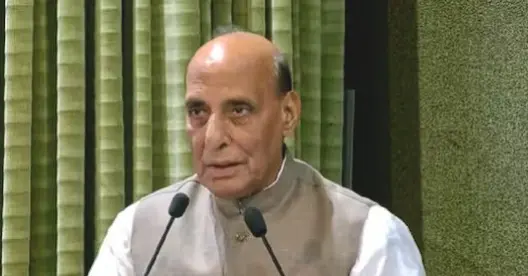
New Delhi: The Indian government has established an Inter-Ministerial Group chaired by Defence Minister Rajnath Singh in a move to address the fallout from the escalating Middle East conflict. The group will closely monitor emerging issues, including supply chain disruptions and their ripple effects on India’s energy security and economy.
Prominent members of the panel include Union Home Minister Amit Shah, Union Finance Minister Nirmala Sitharaman, and Union Petroleum Minister Hardeep Singh Puri, along with other key ministers.
Coinciding with the panel’s formation, the government announced significant adjustments to fuel excise duties to cushion consumers from rising global prices. Excise duty on petr
ol has been slashed by Rs 3 per litre, while it has been reduced to zero for diesel. Additionally, a windfall tax on diesel exports has been set at Rs 21.5 per litre.
For the aviation industry, taxes on Aviation Turbine Fuel (ATF) have been revised with a new special additional excise duty of “Aviation Turbine Fuel Rs 50 per Litre,” as stated in the official notification.
However, targeted exemptions will limit the effective duty to “Rs. 29.5 per litre” in specified cases, providing relief to airlines grappling with volatile fuel costs. These calibrated changes in excise duties are designed to foster overall stability in domestic fuel pricing.
The measures come against the backdrop of a severe global energy crisis sparked by the US-Israel war on Iran. Tehran’s subsequent blockade of the Strait of Hormuz — a vital chokepoint through which 20 to 25 million barrels of crude oil and gas flow daily, accounting for a fifth of global supplies—has sent shockwaves worldwide. Prior to the conflict, India sourced 12 to 15 percent of its oil from this route, amplifying concerns over import vulnerabilities.