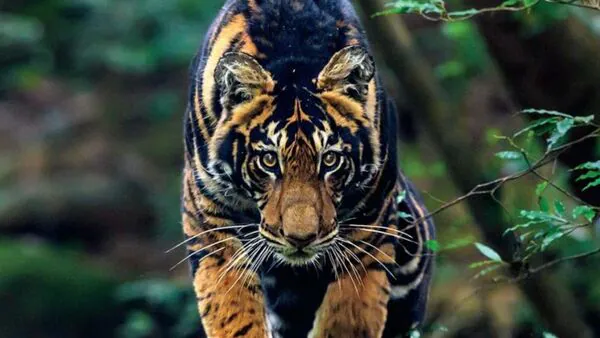
Bhubaneswar: It’s every photographer’s dream to be featured on the cover of National Geographic.
Indian lensman Prasenjeet Yadav has been bestowed that honour, as one of his captures adorns the cover of the prestigious wildlife magazine cover for its October 2025 edition.
The photo selected by National Geographic has an Odisha connection. It’s a stunning shot of a rare black tiger from Similipal Tiger Reserve (STR), located in Odisha’s Mayurbhanj district.
Also known as melanistic tigers, these black big cats are rare genetic variants of the Bengal tiger which are found almost exclusively in Similipal, according to Wikipedia.
What makes the striking photo of the regal big cat, that too, with black stripes, even more striking is the fact that it’s not easy to frame them. It took Prasenjeet months of relentless effort and loads of patience to track the big cat in the dense forests of Similipal National Park.
There are 13 black tigers in Similipal Tiger Reserve, according to the All Odisha Tiger Estimation (AOTE) 2023-24 report. The total tiger population in STR stands at 27, with eight tiger cubs.
Indian photographer’s labour of love
A molecular ecologist turned National Geographic photographer and explorer, Prasenjeet joined a select group of Indian photographers whose photo has been published on the cover of the 135-year-old magazine.
Prasenjeet quit research to use photography as a bridge between science and society. Among his subjects are climate change in the Himalayas, ecological impact of wind energy and species evolution in the Western Ghats.
Prasenjeet, who is the founder of the initiative Shoot for Science, was all praise for officials of Odisha’s Forest department.
“Being out in the forests of Similipal as a National Geographic photographer and Explorer has been a true privilege. I saw firsthand the Odisha Forest Department’s dedicated, on-ground management and the commitment of its officers to safeguarding the future of these majestic tigers,” Prasenjeet said in a statement.
“Photographing T12 was intense and humbling, with days and months of patience distilled into a single moment. Now to see that story on a National Geographic Magazine’s international cover is an honour and a reminder of why we document India’s extraordinary wild heart.”