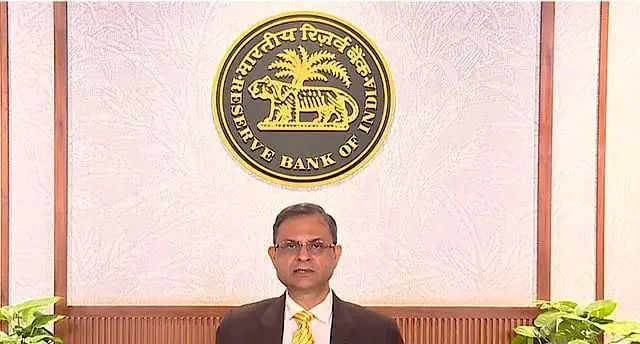
New Delhi: The Reserve Bank of India (RBI), on Wednesday, announced several measures to help exporters tide over challenges posed by the imposition of 50% tariffs by the US. These include reduced paperwork and compliance burden for small exporters and importers.
“The export sector is a vital part of India’s economy,” RBI governor Sanjay Malhotra said while announcing steps to further strengthen the sector and enhance ease of doing business for traders.
Extension of the time period for repatriation from foreign currency accounts of Indian exporters in IFSC, from one month to three months, is one of the key measures. In January 2025, the RBI had permitted Indian exporters to open foreign currency accounts with a bank outside India for the realisation of export proceeds.
Funds in these accounts could be used for making import payments or would have to be repatriated by the end of the next month from the date of receipt of the funds.
“It has now been decided to extend the time period for repatriation, from one month to three months, in case of such foreign currency accounts maintained in IFSC in India,” the RBI governor said, adding this will encourage Indian exporters to open accounts with IFSC Banking Units and also increase forex liquidity in IFSC.
The RBI also kept its policy interest rate unchanged at 5.5% for the second consecutive time, citing concerns over tariff uncertainties.
Announcing the fourth bi-monthly monetary policy of the current fiscal, Malhotra said the Monetary Policy Committee (MPC) unanimously decided to keep the short-term lending rate or repo rate unchanged at 5.5% with a neutral stance.
The policy comes within weeks of a cut in GST and at a time when demand is likely to be created in the domestic market amid the tariff pressure.
Retail inflation is trending below 4% since February this year. It eased to a six-year low of 2.07% in August, aided by an easing of food prices and a favourable base effect.
The RBI also announced steps to promote the use of the Indian Rupee for cross-border settlements.
Banks have now been allowed to lend to non-residents from Bhutan, Nepal and Sri Lanka for bilateral trade in Indian currency.
Observing that India has been making steady progress in the use of the Indian Rupee for international trade, the RBI governor said permission has been granted to authorised dealer banks to lend in Indian Rupees to non-residents from Bhutan, Nepal and Sri Lanka for cross-border trade transactions. Malhotra also proposed to establish transparent reference rates for currencies of India’s major trading partners to facilitate INR-based transactions.
RBI has also permitted wider use of Special Rupee Vostro Account (SRVA) balances by making them eligible for investment in corporate bonds and commercial papers.
SRVA is an account opened by a foreign bank with an Indian bank to facilitate international trade settlements directly in Indian Rupees (INR). These measures will help reduce dependence on the US dollar and thus shield the economy from sudden exchange rate fluctuations and currency crises.
These steps will help reduce pressure on forex and keep the current account deficit at a comfortable level.
India’s current account deficit moderated to $2.4 billion (0.2% of GDP) in Q1:2025-26 as compared with $8.6 billion (0.9% of GDP) in Q1:2024-25 due to increased net services surplus and strong remittance receipts despite a higher merchandise trade deficit, Malhotra said while announcing the fourth monetary policy review.
“During July-August 2025, the merchandise trade deficit continued to remain elevated. Notwithstanding rising global trade uncertainties, India’s services exports, driven by software and business services, witnessed robust growth in July-August 2025,” he said.
Robust services exports coupled with strong remittance receipts are expected to keep the current account deficit (CAD) sustainable during 2025-26, he added.
As on September 26, 2025, India’s foreign exchange reserves stood at $700.2 billion, sufficient to cover more than 11 months of merchandise imports.
According to Malhotra, India’s external sector continues to be resilient, and RBI remains confident of meeting external obligations comfortably.
“Notwithstanding the robust domestic macroeconomic fundamentals, the INR has witnessed some depreciation accompanied by phases of volatility. RBI is keeping a close watch on movements of the INR and will take appropriate steps, as warranted,” he said.