New Delhi: Preferring to wait for more clarity on the impact of rising crude oil prices, supply chain disruptions and geopolitical tensions on inflation and economic growth, the Reserve Bank of India (RBI), on Friday, left the repo rate unchanged at 5.25%.
In a decision that was widely expected by economists, all six members of the Monetary Policy Committee (MPC) voted unanimously to maintain the policy repo rate at 5.25%.
The central bank also retained its “neutral” policy stance, signalling that future decisions will depend on incoming economic data and evolving global developments, as reported by India Today.
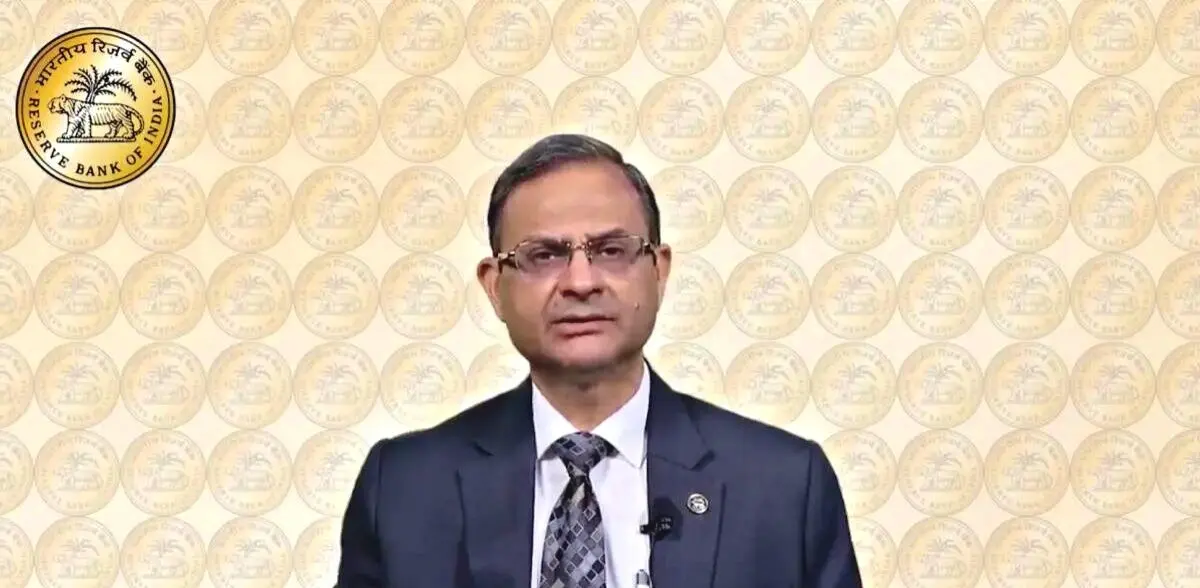
Announcing the decision, RBI governor Sanjay Malhotra said the global environment had become more challenging since the central bank’s previous policy review in April.
“The global environment has deteriorated since the last policy meeting in April,” Malhotra said, pointing to the continuing conflict in West Asia, elevated energy prices and ongoing supply chain disruptions.
This decision comes at a time when policymakers are facing a difficult balancing act.
While inflation remains under control and is still below the central bank’s target level, rising crude oil prices and geopolitical tensions have increased the risk of inflation moving higher in the coming months.
The impact of the global supply shock on domestic prices has so far remained limited, Malhotra said.
“CPI inflation remains below the target despite the global shock as the pass-through to domestic prices has been limited,” he said.
The central bank, however, warned that inflation could move closer to the upper end of its tolerance band during the third quarter of the financial year.
While the RBI expects the impact of current supply-side pressures to ease from the fourth quarter onwards, it remains concerned about the possibility of higher inflation becoming more widespread across the economy.
“Generalisation of inflation through second-round effects on expectations and wages is a distinct possibility warranting close watch,” the governor said.
The growing uncertainty caused by the conflict in West Asia was a key theme running through the RBI g
overnor’s statement.
The global economy is facing heightened uncertainty because of disruptions to trade routes, supply chains and energy markets, the central bank said.
Sharply higher energy prices and supply chain disruptions were beginning to affect economic activity across the world, Malhotra said.
“Global economic outlook remains clouded by the continuing geopolitical impasse in West Asia as sharply escalating energy prices and global supply chain disruptions continue to hinder economic activity,” he said.
Uncertainty remains high because it is still unclear how long the conflict will continue and how severe its impact on global trade and energy markets could become, the RBI warned.
While inflation remains the immediate concern, the RBI also flagged risks to economic growth.
Elevated energy prices and supply constraints are beginning to affect economic activity, the central bank indicated.
While domestic demand remains resilient and both manufacturing and services sectors continue to expand, some high-frequency indicators are showing early signs of moderation in certain segments of the economy, Malhotra said.
“The MPC was of the opinion that there are considerable risks to the baseline assessment of inflation and growth due to the uncertainty about the duration and intensity of the conflict, magnitude of its spillover effects and the pace of restoration of supply chains,” he said.
The RBI is also closely monitoring domestic risks apart from global developments. It highlighted concerns over forecasts of a sub-normal southwest monsoon and the possibility of El Nino conditions.
A weak monsoon could affect agricultural output and food prices, creating additional inflationary pressures.
“The food outlook too remains uncertain on account of sub-normal southwest monsoon forecast and El Nino,” Malhotra said.
These concerns were among the factors that led policymakers to maintain a cautious approach rather than taking any immediate action on interest rates.
By keeping the repo rate unchanged, the RBI has chosen stability over aggressive action.
A rate hike could have helped support the rupee and contain inflationary pressures, but it would also have increased borrowing costs for businesses and consumers.
At the same time, a rate cut was never considered likely given the rise in oil prices and inflation risks.
Lending rates are unlikely to see any major change in the near term, offering some relief to borrowers while giving the central bank time to assess how global developments evolve, the decision means.
The RBI remains watchful and will continue to respond based on incoming data, Malhotra stressed.
“Although risks of higher inflation have amplified, the MPC felt it would be prudent to wait for greater clarity to emerge,” he said.