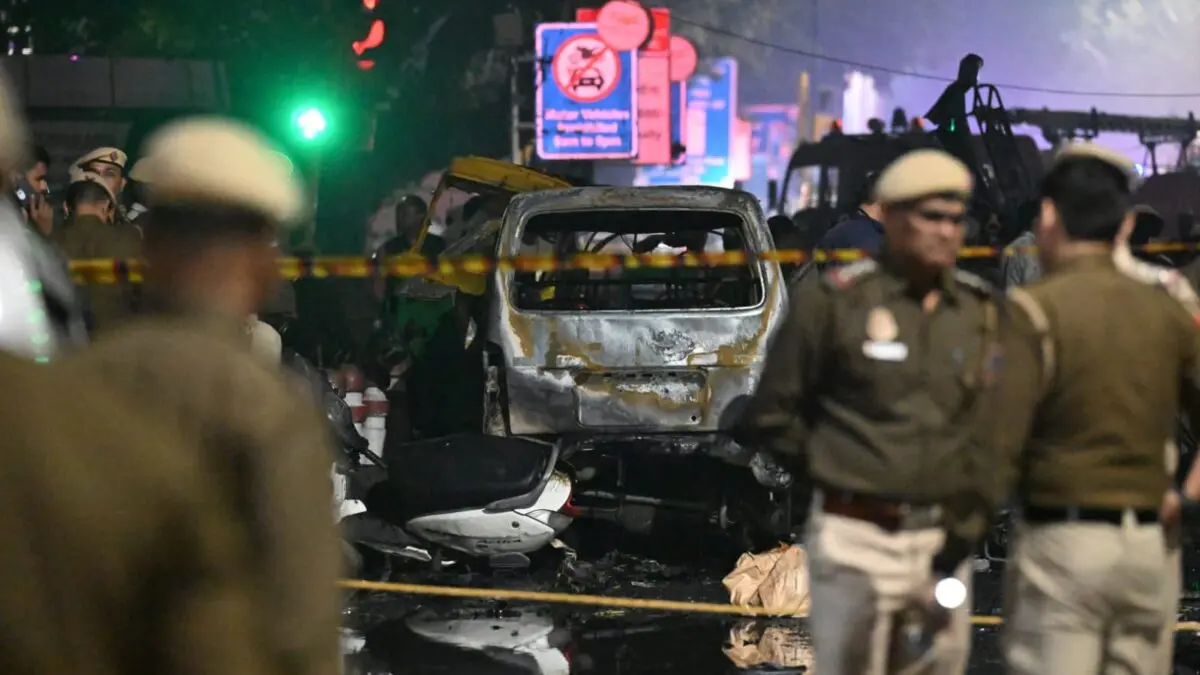
New Delhi: Investigators probing Monday’s Red Fort blast have unearthed chilling details of a larger terror conspiracy that was allegedly in motion for a Republic Day strike next year, reports claim. The car blast module had planned major terror attacks in Ayodhya and Varanasi, with hospitals and crowded public places also on their radar, reported India TV citing sources. However, before the module could execute its plans, the ATS and police busted the network, leading to multiple arrests.
The probe has revealed that Umar un-Nabi — a Pulwama-based doctor — was the key figure behind the explosion, which was triggered prematurely after a panic reaction to police raids in Faridabad. Officials have also found that the accused and his associates had carried out a recce of the Red Fort area weeks earlier, and had procured explosives from a busted terror module posing as an educational network.
Blast foiled a larger plan
Officials said that the device, which exploded inside a parked Hyundai i20 near Red Fort Metro station on Monday evening, was not fully developed. “The bomb was premature and not fully matured, which limited the impact,” a senior officer said. The blast killed ten people and left several injured, but investigators now believe it may have inadvertently averted a far deadlier strike planned for January 26.
Sources revealed that the suspects, including Muzammil and Umar un-Nabi, had surveyed the Red Fort area as part of a detailed reconnaissance for a Republic Day attack. The premature explosion, triggered after Nabi fled Faridabad amid an ongoing anti-terror crackdown, led to the unraveling of the larger network.
Watch CCTV clippings of moments before the blast here:
Delhi Police and central investigating agencies have recovered several video clips captured during the blast.
The explosion’s intensity also disrupted multiple CCTV recordings.#DelhiBlast #RedFort #BreakingNews #NIA #DelhiPolice #TerrorAttack #CCTV #Investigation pic.twitter.com/FSHg6K2pq6— Jasmine (@sharmajasmine01) November 12, 2025
‘Red Fort was not the target’
Investigators now suspect that the blast near Delhi’s Red Fort was not part of the module’s original plan, according to reports. The explosive device lacked a timer or remote trigger, suggesting that the explosion may have occurred accidentally or in haste, India TV report claims. The report also citied sources as saying that the suspects were possibly transporting the explosives when the device detonated prematurely.
Doctor-terror link and Faridabad raids
Umar un-Nabi, a 35-year-old medical practitioner from Pulwama, is believed to have been associated with an organised terror module in Faridabad, where raids last week uncovered nearly 2,900 kg of ammonium nitrate, detonators, rifles, and other explosives. Investigators suspect that the module consisted of educated professionals, including doctors and researchers, who operated under the guise of charitable or academic institutions to channel funds and logistics for terror operations.
Security sources confirmed that Nabi drove the same Hyundai i20 seen in Faridabad CCTV footage days before the explosion. When his associates were detained, he reportedly attempted to flee with leftover explosives and set up the device in Delhi.
Five key revelations from the investigation
1. Premature Detonation: The Red Fort blast was not part of the original plan but resulted from an incomplete device detonating ahead of schedule.
2. Republic Day Plot: The suspects had planned to execute a major strike around January 26 and had already conducted reconnaissance of the Red Fort area.
3. Professional Network: Several suspects were qualified professionals, including doctors, using educational and charity fronts to mask terror activities.
4. Material Link: Forensic tests confirmed that the chemical composition of the explosive matched materials seized in the Faridabad raids.
5. Encrypted Communication: The group relied on encrypted platforms for coordination, fundraising, and recruitment across Delhi, Haryana, and Jammu & Kashmir.
Delhi on high alert
The blast has put the capital on a heightened state of alert. Delhi Police and paramilitary forces have intensified checks at metro stations, entry points, and markets, while anti-sabotage teams have been deployed at sensitive locations including India Gate, Parliament House, and Red Fort itself.
Officials said the pattern of operations suggested an evolving “white-collar terror ecosystem,” where educated individuals manage logistics and finance rather than direct combat roles. “This case marks a disturbing trend of professional operatives taking up terror-linked tasks,” said a senior intelligence officer.
Next phase of investigation
Investigators are now tracking the financial and digital footprint of the network to establish cross-border links. The National Investigation Agency (NIA) and Delhi Police Special Cell are coordinating with intelligence agencies to verify if the group has international handlers.
Officials have also intensified security drills across the capital in the run-up to Republic Day, with increased surveillance near historic monuments and government complexes.
Families of victims: Tattoos helped in identifying deceased
“… We don’t yet know if it was a terror attack. He had a shop in Bhagirath Palace and had left at around 6:45 PM. He might have been waiting for a taxi… We got the information about it when we called on his phone number and it was answered by a woman who told us about the blast… We identified him after an inquiry; he had a tattoo on his hand, a chain with a ring, and an earring… He had the injury only on his head, while his body was fine…,” said father of one of the deceased, Amar Kataria, who lost his life in the blast, Jagdish Kataria, said.
#WATCH | Delhi | Father of one of the deceased, Amar Kataria, who lost his life in Red Fort Car blast, Jagdish Kataria says, “… We don’t yet know if it was a terror attack. He had a shop in Bhagirath Palace and had left at around 6:45 PM. He might have been waiting for a… pic.twitter.com/fuPbg5Cdqp
— ANI (@ANI) November 12, 2025