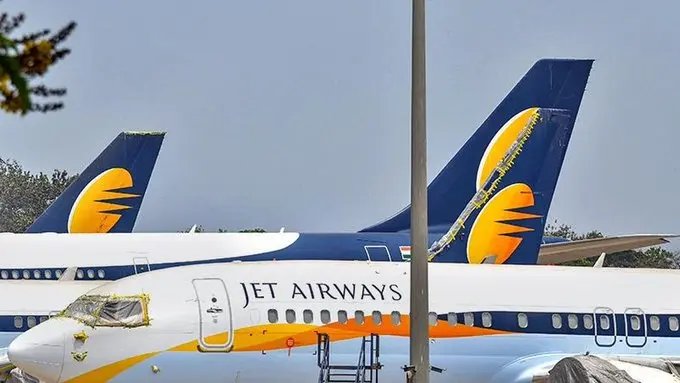
New Delhi: In a major relief for thousands of former Jet Airways employees, the National Company Law Appellate Tribunal (NCLAT) has upheld an earlier order directing the airline’s liquidator to pay provident fund (PF), gratuity and pension dues in full, dismissing appeals filed by the financial creditors and banks.
The appellate tribunal also held that the 1,656 days spent in litigation during Jet’s extraordinarily prolonged corporate insolvency resolution process (CIRP) must be excluded when computing the 24 months preceding the liquidation commencement date, reported the Bar and Bench.
“Workman dues for the period of 24 months preceding the liquidation commencement dated (26.11.2024) cannot be treated as nil,” NCLAT held in the appeal filed by
the workmen.
The lenders had argued that provident fund, gratuity and pension fund dues should be included in the liquidation estate and distributed among all creditors under the IBC. They further contended that such dues could only be excluded if dedicated provident fund and gratuity funds existed when the liquidation process began.
Rejecting these arguments, the NCLAT ruled that employees’ statutory dues remain outside the liquidation estate, ensuring they are protected from competing creditor claims.
The judgment is expected to benefit around 11,800 workmen and other former Jet Airways employees. Employee groups estimate the airline’s outstanding PF and gratuity dues at around Rs 265 crore.
Welcoming the verdict, former Jet Airways senior vice president and advisor to the Staff and Officers Association of Jet Airways, Narayan Hariharan, described it as a landmark decision that brings long-awaited relief after years of litigation.
He said employees had consistently pursued the issue and noted that the Supreme Court had eventually ordered the airline’s liquidation, after which the NCLT directed that gratuity dues be protected and paid.
Jet Airways suspended operations in April 2019 after a severe financial crisis. In November 2024, the Supreme Court ordered the airline’s liquidation after ruling that the consortium had failed to implement the approved resolution plan.