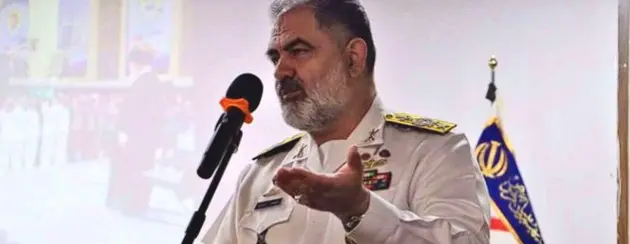
Tehran: Iran’s navy chief, Rear Admiral Shahram Irani, has dismissed US President Donald Trump’s threat to impose a naval blockade on the Strait of Hormuz, calling the plan “ridiculous” and “laughable” after a round of talks between Tehran and Washington ended without an agreement.
The comments come against a backdrop of escalating tensions over Iran’s regional role and Washington’s push to tighten both economic and military pressure on the Islamic Republic, AFP reported.
In remarks broadcast on Iranian state television, Irani said Iran’s naval forces are closely monitoring all US military activity across the wider Persian Gulf region. “The brave men of the naval force of the Army of the Islamic Republic of Iran are monitoring and supervising all the movem
ents of the aggressive American army in the region,” he declared.
“The threats of the US president to blockade Iran at sea… are very ridiculous and funny.” The statement is intended to project strategic confidence and resilience, even as the United States escalates its confrontational posture.
Trump announced earlier this week that the United States would enforce a “complete maritime blockade” on shipping entering or leaving Iranian ports, set to begin on Monday at 10:00 a.m. Eastern Time, following the collapse of multilateral talks over Iran’s ballistic‑missile program and regional security influence.
US Central Command has clarified that the operation will target vessels either approaching Iranian ports or carrying Iranian‑origin cargo, while asserting that other commercial traffic through the Strait of Hormuz will continue without disruption.
The Strait of Hormuz is one of the world’s most vital maritime chokepoints, with about a fifth of global oil consumption passing through it each day. Analysts caution that any attempt to weaponize the waterway against Iran could sharply lift global oil prices and increase the risk of direct military clashes.