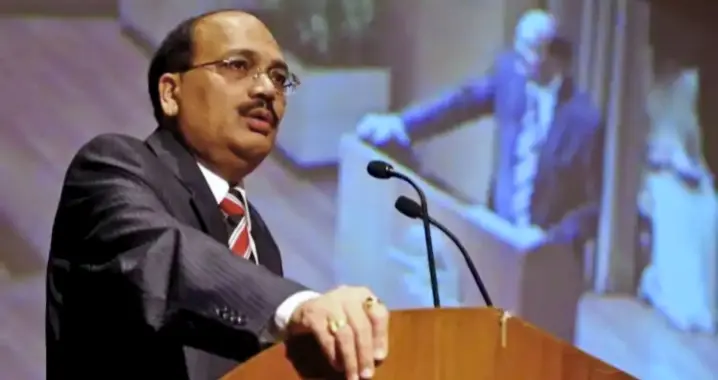
New Delhi: Human rights violations require coordinated action across institutions, Chief Justice of India Surya Kant said on Monday, calling upon courts, governments, and other institutions to work together to address systemic failures and protect the rights of the most vulnerable.
“Courts must intervene when constitutional rights are violated. Human rights commissions must investigate complaints, identify systemic failures and ensure that concerns which may otherwise remain invisible receive institutional attention,” he said, as reported by The Indian Express.
“A right that works for the powerful but fails the powerless is not a right in true sense,” CJI Kant said while addressing the National Human Rights Commission’s 33rd foundation day event and conference on ‘Water-the Elixir of Life: Advancing Human Dignity through the Right to Water’, in New Delhi.
“It is a privilege with better branding. The true measure of a human rights institution is therefore not only the number of cases it decides, but whether it can be heard by those who are least able to make themselves heard,” he said.
The Constitution’s promise of dignity, equality, liberty and justice must be observed “day after day, in the field, in the lock-up, in the hospital ward and in the village at the end of the road”, the CJI insisted.
Citing the commission’s interventions in cases involving custodial torture, deaths, bonded labour, and rights of marginalised communities, he said the state human rights commissions “can hear a complaint in the language in which it is made, reach the place where it has occurred and understand the local circumstances in which it has taken place”.
Article 21 has evolved “into a guarantee of a life lived with dignity” and the Supreme Court’s environmental jurisprudence had recognised that the right to life includes the right to enjoy pollution-free water and air, he said.
“The constitutional question, therefore, is no longer only what the State must refrain from doing, but also what it must ensure so that people can live with dignity,” he said.
While acknowledging India’s efforts to expand access, including household tap connections in rural areas, the CJI said the question now is whether the water is “safe, reliable and available when the family needs it”.
“A mere tap is not the same as access to water. A pipe that runs dry cannot fulfil the promise that the pipe represents. And water contaminated with arsenic, fluoride or other harmful substances is not a service; it is a threat to life and health,” CJI Kant said.
.
The rights of future generations cannot be ignored, he insisted. “Every aquifer depleted, every river polluted and every source of drinking water compromised, transfers a burden to a generation that had no part in creating it,” he pointed out.
“If human rights are ultimately about protecting human dignity, then that protection must extend across time. We must leave the posterity not merely a Constitution that promises rights, but a country in which those rights remain possible to enjoy,” he said.
NHRC chairperson Justice V Ramasubramanian said that while the world had made progress over the past century, it was also grappling with climate change and growing inequality. He said the consequences would be felt most severely by the vulnerable sections of society and underlined the need for human rights institutions to rethink how they respond to emerging challenges.
The approach to human rights was earlier “two-dimensional”, with the presumption that it was “citizen versus the state”, he pointed out.
“But it is not so anymore. Non-state actors now play a huge role, especially after the digital revolution… Today, in the digital world, our opinions can be manipulated, our thought processes can be influenced, and our activities, both physical and mental, can be monitored,” he said.