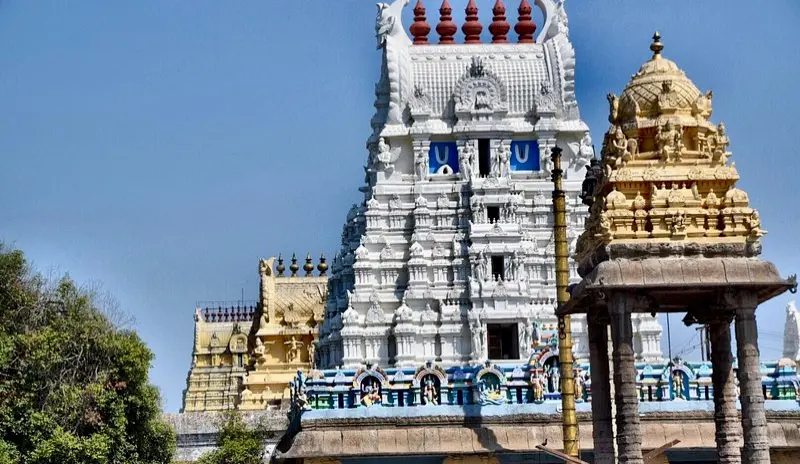
New Delhi: This dispute isn’t between two religions over a place of worship, but one between two Hindu sects regarding the right to perform rituals at a temple.
With the aim to resolve the issue that has been lingering for 120 years, the Supreme Court, on Wednesday, appointed former judge Justice Sanjay Kishan Kaul as principal mediator to settle the conflict between two sects of Sri Vaishnavas over performance of rituals at the historic Sri Devarajaswamy Temple at Kanchipuram in Tamil Nadu.
The bench of Chief Justice of India Surya Kant and Justice Joymalya Bagchi was hearing an appeal by S Narayanan, challenging a Madras High Court order that dismissed a petition seeking permission for the Vadakalai sect to recite prayers inside the sanctum sanctorum of the temple.
The conflict pertains to ritual recitals within the temple, where historically the Thenkalai sect has been performing prayers.
The Vadakalai sect were being unlawfully denied the right to participate in the rituals, despite being recognised as a religious denomination, it was contended by the petitioner.
“Learned senior counsels have gracefully agreed to mediation so that the day-to-day rituals can be performed in an amicable manner. In this regard, we request Mr Sanjay Kishan Kaul, former judge of this court, who was the Chief Justice of Madras High Court also, to act as the principal mediator,” the SC observed.
“Justice Kaul may associate two more persons of his choice who are well conversant
in Tamil and Sanskrit languages, rituals and the religious history of the temple,” the CJI said in the order after both parties agreed to go in for mediation for amicable resolution of the dispute.
The Bench has now fixed the plea for consideration on March 13.
A division bench of the Madras High Court, in December last year, had upheld the exclusive rights of the Thenkalai community to perform the Adhiapaka Mirasi (official ceremonial worship) at the temple.
The high court had dismissed challenges raised by Vadagkalai members seeking to recite their own mantram and prabandham during ceremonial worship, holding that such attempts would violate settled judicial decrees and disturb public order.
During the brief hearing before the Supreme Court, the petitioners assailed the high court verdict saying it relied heavily on pre-Constitution decisions that recognised hereditary Adhiapaka Mirasi rights of the Thenkalai sect.
The High Court order was incompatible with Article 25 of the Constitution, which guarantees freedom of religion, they submitted.
The counsel appearing for the respondents submitted that the ritual recitals by the Thenkalai sect date back over 300 years and are deeply embedded in the temple’s traditions and established practices.
The petitioner informed the bench that during the COVID-19 pandemic, a flexible arrangement had been worked out wherein each sect was allowed to chant its respective mantras for 20 seconds. However, this arrangement was later discontinued, with the temple administration directing that recitals be performed only by the Thenkalai sect.
The Apex Court took note of the submissions and the willingness of both parties to explore a consensual solution, and recorded that senior counsel on both sides had “graciously agreed” to refer the matter to mediation and passed the order appointing Justice Kaul as principal mediator.