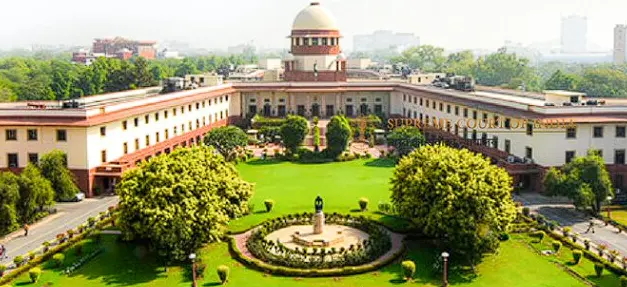
New Delhi: The Supreme Court on Thursday put on hold the execution of the death penalty awarded to an Indian Mujahideen (IM) operative for his role in the 2008 Ahmedabad serial bomb blasts, which killed 56 people.
A bench of Justices Vikram Nath, AG Masih and Sandeep Mehta issued notice to the Gujarat government on the plea of Ahmed Bawa, alias Abbu Abubakar Barelvi, challenging the high court judgment that upheld his death sentence. The top court sought the trial court records and ordered that the execution be stayed.
Solicitor General Tushar Mehta, appearing for the state, told the bench it was a serious matter, as reported by The New Indian Express.
‘Humongous’ Conspiracy, Widespread Terror
On July 7, the Gujarat High Court had confirmed the death sentences of 38 IM operatives in the blasts case. It cited the heavy casualty toll, the “humongous” conspiracy and the intention to spread widespread terror as grounds for upholding the capital punishment.
The high court also kept the life sentences of 11 others, saying it was proved that they took part in terror training camps in Gujarat and Kerala and helped the conspiracy with logistical support.
On July 26, 2008, 21 bombs exploded across Ahmedabad within about 70 minutes, killing 56 people and injuring more than 200. Explosions also struck hospitals where victims were being treated, marking the first time medical facilities were targeted in a terror attack in India.
The high court rejected all the appeals and upheld the special court’s February 2022 order, which gave the death penalty to 38 IM members and life sentences to 11 others. The state government had asked the court to confirm the death sentences.
The court said the past records and roles of the 38 convicts showed they had carried out a terrorist act that deserved the death penalty. It also said the special court had looked at both the factors that could reduce the sentence and those that made the crime more serious before deciding the punishment.
It held that the high number of deaths, the “humongous nature of conspiracy”, the aim “to create an atmosphere of widespread terror in the society”, the behaviour of the convicts during the trial, and the killing of innocent people in the “inhuman and dastardly act” justified giving them the death penalty.
“The manner in which the bomb blasts were executed speaks volumes about the mindset and the remorseless act of taking away the lives of innocent people,” the high court had said.
Compensation, Fines Upheld
The court observed that some convicts had criminal antecedents, none had shown remorse, and disciplinary action had been taken against them in jail, leaving no scope for leniency.
In the case of the 11 life-term convicts, the high court said the prosecution had proved their role in terror training camps and in procuring scooters, plastic containers and clocks used in the conspiracy, besides arranging shelter for others.
It also upheld fines on the convicts, citing the magnitude of the offence, damage to public property and large-scale loss of life and injuries. The court directed the Gujarat government to pay Rs 10 lakh each to the families of the deceased and Rs 5 lakh each to the grievously injured by March 30, 2027.
The convicts include former SIMI leader Safdar Nagori and associates from 11 states. Seventy-eight people were tried after 35 police cases were merged; 49 were convicted. The special court’s 2022 order was the first time 38 people were awarded death in a single case.