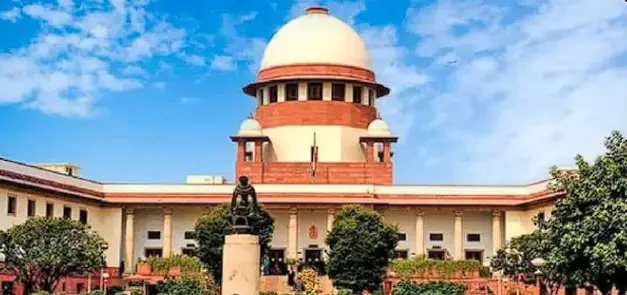
New Delhi: The Supreme Court will hear on Monday a set of petitions seeking the suspension of Chief Election Commissioner Gyanesh Kumar and the cancellation of decisions allegedly taken without the approval of the other two Election Commissioners.
A bench headed by Chief Justice Surya Kant and comprising Justices Joymalya Bagchi and V Mohana will hear the petitions filed by Patna resident Rakesh Kumar Singh and advocate Shailendra Mani Tripathi.
The petitions challenge decisions, guidelines and software changes allegedly made by Kumar without the consent of Election Commissioners Sukhbir Singh Sandhu and Vivek Joshi.
Singh’s public interest litigation has asked the court to examine whether Kumar used powers that belong to the Election Commission as a whole. It has also sought action against him if the court finds that he acted alone, as reported by The New Indian Express.
“Direct that respondent No.3 (CEC) shall not exercise the functions of Chief Election Commissioner of India pending final hearing of the present petition; direct that during such period, the business of the Commission be transacted by the unanimous decision of respondent Nos. 4 (Sukhbir Singh Sandhu) and 5 (Vivek Joshi); and direct that any appointment to the resulting vacancy be made upon the recommendation of a Committee, including the Hon’ble Chief Justice of India,” the plea reads.
The petition has sought Kumar’s suspension until the case is decided. It said this was necessary to protect the Election Commission’s multi-member structure.
Dispute Over Poll Roll Revision
The petitions were filed after The Indian Express reported that Sandhu and Joshi had objected at least 14 times in the past 10 months to decisions related to the Special Intensive Revision of electoral rolls.
The two commissioners reportedly said the decisions had been issued without their knowledge or recommendation.
The Election Commission said differences of opinion were normal during discussions in any institution. It also said all its orders were legally valid and followed the required procedures.
The Union Law Ministry, the Election Commission, Kumar, Sandhu, Joshi and senior poll panel official Maneesh Garg have been named as respondents in Singh’s petition.
Tripathi’s petition, filed through advocate Chand Qureshi, alleged that the CEC had violated the legal requirement that decisions be taken collectively by the Election Commission.
Criminal Proceedings Sought
Tripathi has also sought criminal proceedings against Kumar and other officials for allegedly failing to perform their official duties properly.
“Divested of any statutory or constitutional immunity, the Chief Election Commissioner remains directly accountable under the law — subject to police investigation, evidence gathering, and regular trial proceedings as an ordinary accused,” the plea states.
The petition refers to Section 18 of the Chief Election Commissioner and Other Election Commissioners Act, 2023. The section says decisions must be taken by the Election Commission and that the majority view will prevail if the commissioners disagree.
One major issue raised in the petition is the alleged change to Form 6, which is used to register as a voter.
The petitioner claimed that the Election Commission’s software added a requirement for details of a person’s ancestors and a link to the previous SIR. It alleged that the change was made without the statutory amendment required under election rules.
Changes To Form 6 Challenged
The petition claimed that Sandhu and Joshi objected to the change. They reportedly said Form 6 could not be changed without following the legal procedure.
“Issue a writ of mandamus or any other appropriate writ, order, or direction declaring all decisions, guidelines, directives, and software modifications initiated, approved, or implemented under CEC Gyanesh Kumar without full commission concurrence or contrary to the majority opinion of the Election Commissioners as unconstitutional, ultra vires, and void ab initio,” the plea says.
The petition also raised issues related to electoral-roll revisions in Goa and West Bengal.
In Goa, it alleged that the software did not allow the restoration of the names of 97 eligible voters, despite directions for their verification.
In West Bengal, the petitioner claimed that more than 16.10 lakh appeals were filed in the name of the Election Commission against voters whose names had been restored by judicial officers.
The plea said the other two election commissioners and the West Bengal chief electoral officer were not aware of, and had not approved, the filing of these appeals.