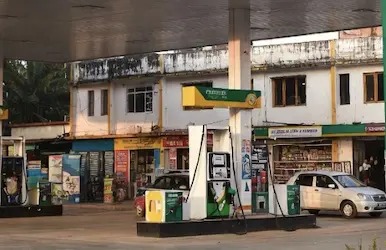
Bhubaneswar: The Odisha government’s directive to fuel filling stations not to give petrol/diesel to vehicles not having the mandatory PUCC (pollution under check certificate) is turning controversial with experts questioning the legality of such measures.
The Supreme Court’s 2020 verdict, stemming from civil appeals filed in 2015, has been referenced in the ongoing debates.
On August 28, 2020, the SC set aside a National Green Tribunal (NGT) order directing petrol pumps not to supply fuel to vehicles lacking a valid PUCC in Madhya Pradesh. The court held that the NGT overstepped its jurisdiction by imposing a blanket fuel denial policy. The appellants, including the State of Madhya Pradesh, argued that such a measure was not authorised under existing laws like the Motor Vehicles Act, 1988, or the Central Motor Vehicles Rules, 1989, and could hinder practical compliance efforts.
“Stoppage of supply of fuel to vehicles not complying with the requirement to have and/or display a valid PUC Certificate is not contemplated either in the 1989 Rules or in the NGT Act. Motor Vehicles not complying with the requirement of possessing and/or displaying a valid PUC Certificate cannot be debarred from being supplied fuel,” the order noted
The bench of Justices Arun Mishra, Indira Banerjee, and M R Shah further reasoned that the directive ignored practical realities, such as the need for vehicles to use fuel to reach repair shops or testing centres for PUC compliance. It also clarified that while the NGT could direct suspension of vehicle registrations and penalties for non-compliance, it lacked the authority to invent new enforcement mechanisms outside statutory provisions.
Legal Basis For Odisha’s Decis
ion
To tackle vehicular pollution and strengthen environmental compliance, the State Transport Authority (STA) of Odisha on December 20 issued a strict directive to all oil marketing companies (OMCs) operating in the state to ensure their retail outlets verify PUC certificates before dispensing petrol or diesel.
Odisha’s decision followed similar steps taken earlier this week by the Delhi government, which rolled out a fresh set of emergency measures to tackle worsening air pollution in the national capital.
The STA order cited Section 190(2) of the Motor Vehicles Act, 1988, and Rule 115 of the Central Motor Vehicles Rules, 1989, which mandate adherence to prescribed emission standards, as the legal basis for the decision, while emphasising that operating a vehicle without a certificate is a punishable offence under the law.
It further stated that fuel outlets must ensure that fuel is dispensed “only after verifying the validity of PUCC of the vehicle,” while also carrying out “adequate sensitization of retail outlet staff regarding the legal requirement and procedure.”
The department has also incorporated PUCC inspections into the e-detection system at all toll gates across the state.
Transport Minister Bibhuti Bhusan Jena also defended the policy, stating, “We wrote a letter to get this implemented so that people without a pollution certificate would not be able to buy petrol or diesel,” amid concerns over Odisha’s air quality index (AQI).
Although it was initially planned to come into effect on January 1, 2026, the measure has now been deferred to February 1 because of the chaotic crowds at emission testing centres as vehicle owners hurried to obtain valid PUCCs.
The central Vahan database has revealed a significant compliance gap with 50 to 60 lakh vehicles of 1.17 crore registered in Odisha lacking PUCC. While the government is planing an awareness campaign to boost PUCC compliance, all eyes are on whether the Supreme Court precedent will prompt a rethink or a courtroom battle.