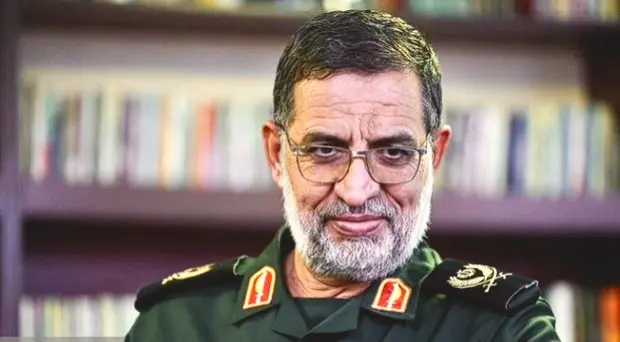
Tehran: Iranian state media Press TV announced on Friday that Brigadier General Ali Mohammad Naeini, Islamic Revolutionary Guard Corps (IRGC) spokesperson, was killed in US-Israeli strikes. This latest strike compounds a deadly toll on Iran’s elite since Ayatollah Ali Khamenei’s assassination on February 28, kicking off the ongoing conflict.
Since then, losses have mounted rapidly. On Monday night Israeli airstrike killed security chief Ali Larijani, 67, a key Khamenei associate and ally to successor Mojtaba Khamenei —Tehran’s highest-ranking casualty 19 days in, according to Iranian accounts.
Strikes continued on Tuesday, claiming Gholamreza Soleimani, Basij paramilitary leader who directed intern
al security for six years and drove military countermeasures.
The Israel Defense Forces (IDF) on Thursday confirmed the killing of Intelligence Minister Esmaeil Khatib, whom they held responsible for crackdowns during the 2022-2023 Mahsa Amini protests.
President Masoud Pezeshkian mourned the losses as a “cowardly assassination of my dear colleagues,” saying they “left us heartbroken.” In an X post cited by Al Jazeera, he vowed their “path will continue stronger than before.”
Foreign Minister Abbas Araghchi, speaking earlier this week, downplayed the impact on Iran’s stability. “I do not know why the Americans and the Israelis still have not understood this point: The Islamic Republic of Iran has a strong political structure with established political, economic, and social institutions,” he stated in an interview.
“The presence or absence of a single individual does not affect this structure,” he said, adding:”Individuals are influential, and each person plays their role — some better, some worse, some less — but what matters is that the political system in Iran is a very solid structure.”