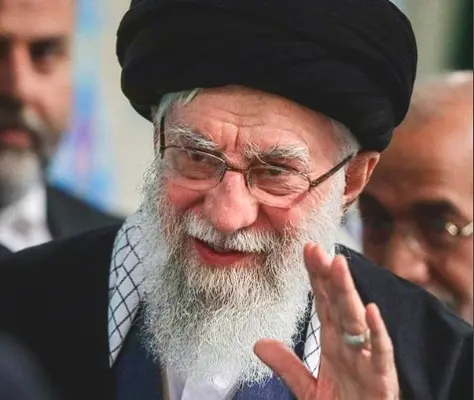
Barabanki: As Muslims throughout northern India celebrated Eid-ul-Fitr on Saturday, Shia residents of Kintur village in the Badosarai area here opted out entirely to grieve Iran’s Supreme Leader Ayatollah Ali Khamenei, felled by US-Israeli airstrikes on February 28.
A pall of gloom enveloped the village, deepened by the slain cleric’s ancestral ties to the area. This shared heritage turned what should have been a day of festivity into one of solemn protest.
Sarwar Ali, caretaker of the 19th-century monument Waqf Nawab Amjad Ali Khan Imambara, explained the subdued mood. “Shia families observed no festivities this year. They did not prepare ‘sewaiyaan’ at home or embrace each other; they only offered the congregational prayers. A protest demonstration was carried out peacefully,” he said.
On Eid-ul-Fitr, residents gat
hered to condemn the joint US-Israel military action against Iran, calling it “unjust” and raising slogans against Israel, Ali added.
Dr Rehan Kazmi, a local resident, echoed the sentiment: “there is an atmosphere of gloom following the killing of Khamenei.”
The emotional bond stems from Kintur’s historical connection to Ayatollah Ruhollah Musavi Khomeini, mentor to Khamenei and architect of Iran’s 1979 Islamic Revolution. Locals believe a forefather of Khomeini migrated from Kintur to Iran around 150 years ago. Though centuries have passed, this lineage retains profound significance for the community.
Syed Nihal Ahmad Kazmi, who claims descent from Khomeini’s family, had earlier told PTI that Kintur was the birthplace of Khomeini’s grandfather, Syed Ahmad Musavi.
Kazmi said Musavi had participated in India’s freedom movement and embarked on a pilgrimage to Iran in 1834. Since he was a freedom fighter, the then British administration allegedly did not permit him to return to India, PTI reported.
“So Musavi settled in the city of Khomein in Iran, where his grandson Khomeini was born,” Kazmi added. He noted that the slain Khamenei, Khomeini’s disciple, carried forward his legacy after the latter’s death in 1989.