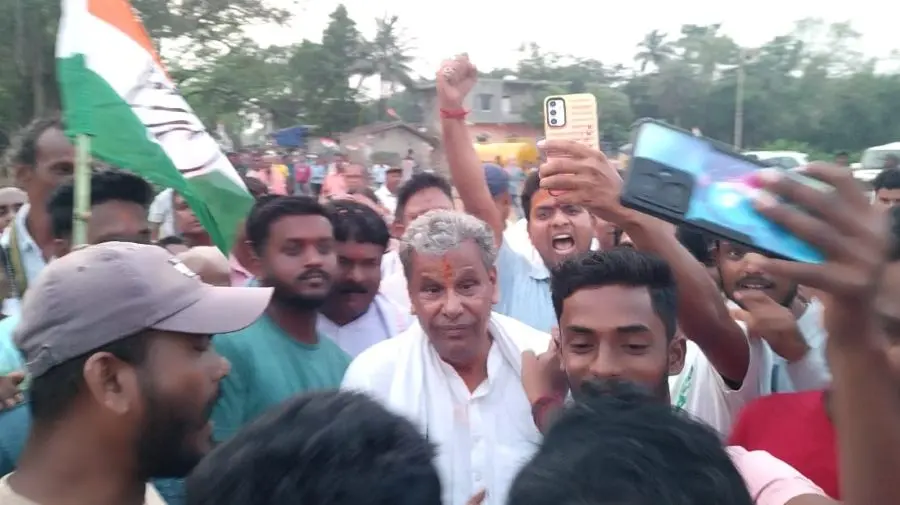
Bhubaneswar: Former Union minister Srikant Jena has written to Odisha Chief Minister Mohan Charan Majhi, seeking clarity on the proposed Adani AI data centre at Naraj, on the outskirts of Kataka.
Jena pointed out that following the CM’s UAE visit, the Odisha government approved 27 projects worth Rs 2.47 lakh crore at the HLCA meeting on September 23, including the Adani-linked High Density Data Centre project at Naraj, with a proposed investment of Rs 1.04 lakh crore, a reported 1 GW (1000 MW) capacity and approximately 250 acres of land.
“Yet, the project’s MoU, agreements and detailed HLCA minutes covering electricity supply, water consumption, environmental impact assessment and tax concessions remain unavailable in the public domain,” Jena stated.
The senior politician claimed that the Naraj project’s enormous electricity and water demands, coupled with noise and heat pollution, could threaten the region’s ecosystem, drinking water security in Bhubaneswar and Kataka, and water availability in Mahanadi river system.
“What benefits will the people of Odisha receive in return for these substantial costs to their natural resources?” Jena asked the CM.
Suggesting an alternative location where sea water can be used for cooling and alternative energy sources, Jena said people of Odisha have the right to know full cost of the concessions and benefits extended to corporate houses and what Odisha is getting in return.
Jena sought response on following questions:
* Electricity: From which sources will the project obtain electricity equivalent to the domestic consumption of Odisha’s 4.5 crore people? 1 GW (1000 MW) data centre operating at full capacity could consume 2.4 crore units of electricity every day which is equal to Odisha’s domestic electricity consumption by 4.5 crore people. If coal-fired power is used, what will be the environmental cost to Odisha, when its domestic consumers and farmers receive no free electricity unlike other states. Will the project receive free land, free water, electricity at a concessional rate of ₹1 per unit, and a 20-year tax exemption, as reported in the case of Visakhapatnam which is being opposed by local people?
* Water: From where will 30 million litres of water per day (30 MLD) be supplied? Bhubaneswar already faces a water-supply deficit exceeding 100 million litres of water per day (100 MLD), while excessive borewell extraction is depleting groundwater. The Mahanadi river system and adjoining canals are nder stress, with canals in the undivided Cuttack region and in Puri water scarcity adding to the concern. With the Mahanadi water dispute with Chhattisgarh still unresolved, how will this additional demand of over 30 MLD be met without compromising drinking-water supplies and agricultural use for the farmers.
* Employment: How will an investment of Rs 1.04 lakh crore generate meaningful employment for Odisha’s people?
While the project projects mere 1,000 jobs, the fact remains that permanent employment at AI data centres is potentially amounting to just 50 engineers and 200-300 maintenance and security staff only. With Odisha facing severe unemployment and high levels of out-migration for work, A garment manufacturing hub modelled on Tiruppur, a city in Tamil Nadu smaller than Bhubaneswar, could potentially generate up to 10 lakh jobs and Rs 50,000 crore in annual turnover with an investment of just a few hundred crores. Why is the Government keen for AI Data Centre?
* Environmental Impact: Has an independent environmental impact assessment been conducted, and will it be made public? AI data centres generate enormous noise and heat pollution, besides air pollution and excessive water consumption. These impacts could raise the surrounding temperature of Bhubaneswar and Cuttack by 2-3°C, potentially pushing temperatures up to 50°C, while threatening nearby communities and biodiversity.
