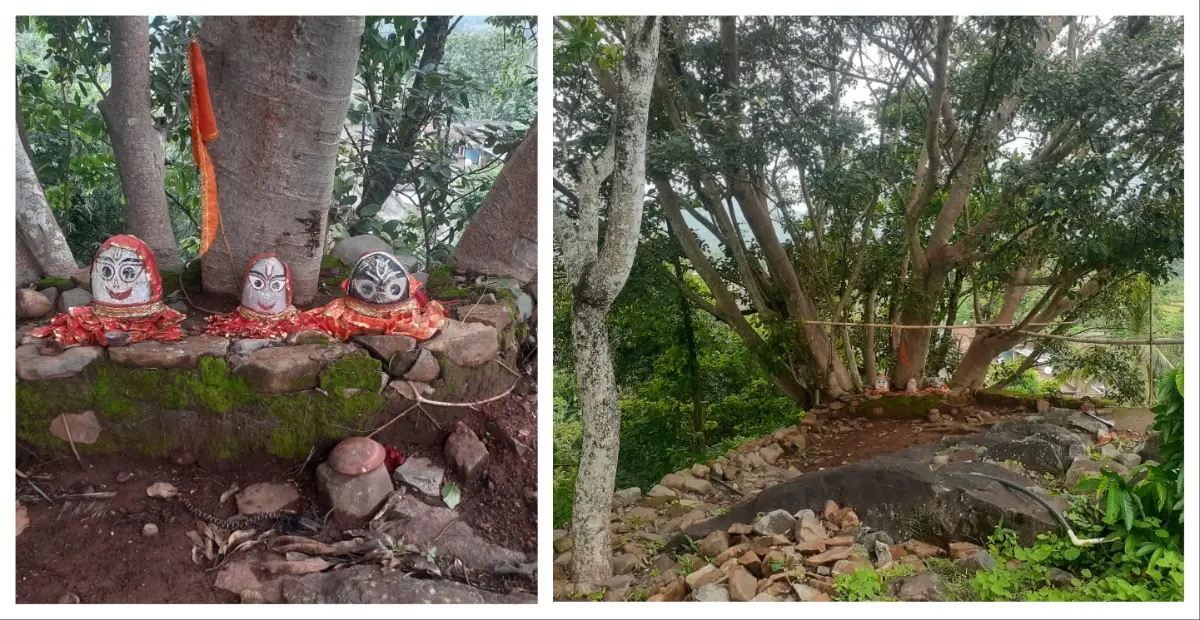
Brahmapur: As devotees across Odisha busy get soaked in devotion amid Rath Yatra fervour, the Saura (Sabara) tribes living at the foothills of the Mahendragiri hills in Gajapati district continue to preserve a rare centuries-old tradition — the Stone Jagannath Yatra (Pashana Shri Jagannath Yatra).
Observed in more than 50 Saura villages, the unique festival begins on Snana Purnima and concludes on Nabajouban Darshan, a day before the grand Rath Yatra. Unlike the conventional chariot festival, the deities are not taken out in wooden chariots. Instead, three sacred stones symbolising Lord Jagannath, Lord Balabhadra and Goddess Subhadra are worshipped beneath a tree, reflecting the ancient tradition of Neelamadhab worship.
The celebrations commence at Khambari Sahi, a tribal village at the base of Mahendragiri, and continue with all-night vigils, traditional Saura songs, music and dance, creating a vibrant spiritual atmosphere across the region.
The deities are invoked in the Saura language as Yagamar (Jagannath), Ta’armar (Balabhadra) and Saang Saangbaya (Subhadra). The tribes also offer prayers to other divine forces, including Rama, Bhima, the Sun, the Moon and Varuna, the god of rain. Every ritual begins with the sacred chant of “Heya”, the Saura pronunciation of “Om.”
Only wild seasonal fruits such as mangoes, jackfruits, jamuns and pineapples are offered as bhoga, earning the festival the popular local name “Aamba Parba” (Mango Festival).
According to tribal elders, the tradition has been handed down through generations with the primary objective of seeking universal peace, prosperity and timely rainfall. The ritual is deeply rooted in the belief that Lord Jagannath first manifested in a tree hollow before becoming the presiding deity of Puri.
The stone Jagannath Yatra remains one of Odisha’s most distinctive tribal spiritual traditions, showcasing the rich cultural heritage of the Saura community and its enduring bond with Lord Jagannath.