For countless Odias, the annual Rath Yatra at Puri is not merely a religious festival but an emotional homecoming. Millions travel in crowded buses and trains, jostle through the sea of devotees on the Grand Road, and patiently await a fleeting glimpse of Lord Jagannath and His siblings. Those unable to be physically present—including Odias living across India and abroad—follow the festival through live television broadcasts.
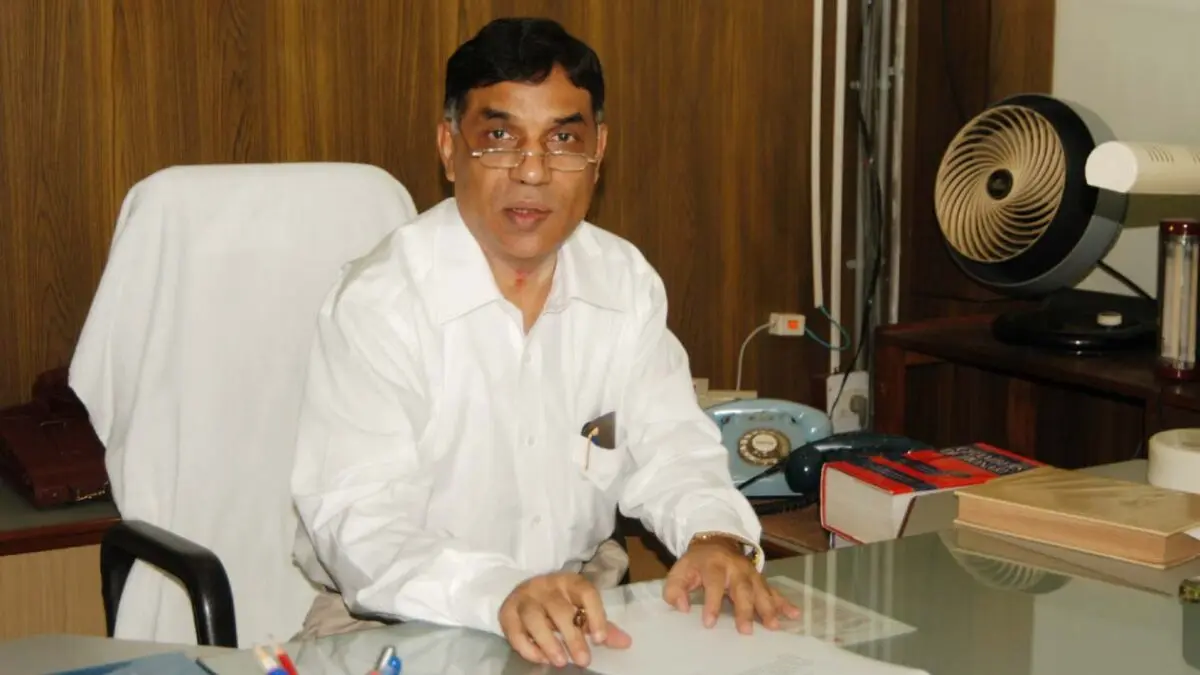
For many years, Doordarshan’s English telecast had one reassuring constant: the scholarly presence of Dr Subas Pani, whose lucid and deeply researched commentary introduced the Jagannath tradition to audiences far beyond Odisha.
This year, however, that familiar voice was missing. It has been almost a year since Dr Pani left us. For those of us fortunate enough to know him as a colleague, mentor and friend, the Rath Yatra became an occasion not only of devotion but also of remembrance.
Dr Pani invariably reminds me of C P Snow’s celebrated 1959 Rede Lecture, The Two Cultures, in which Snow lamented the growing divide between the sciences and the humanities. He argued that the mutual incomprehension between these two intellectual worlds was a serious impediment to social progress. Dr Pani stood as a remarkable refutation of that proposition. Few individuals have embodied the two cultures with such natural ease and distinction.
He was at once a serious student of English literature, an erudite scholar of Odia language and culture, a gifted musician, and an administrator capable of conceptualising and executing complex information technology and e-governance initiatives. His intellectual curiosity recognised no disciplinary boundaries. He was equally passionate about preserving Odisha’s rich cultural heritage and harnessing modern technology to transform governance.
Among the pioneers of information technology in public administration, Dr Pani was decades ahead of his time. In the late 1980s—well before the Windows era and before Microsoft products became ubiquitous—many of us were only beginning to acquaint ourselves with applications such as dBase III and Lotus 1-2-3. Dr Pani, however, was already engrossed in the possibilities of relational database management systems, a subject that appeared almost esoteric to most administrators of that period.
His vision and leadership transformed the Odisha Computer Application Centre (OCAC) into a premier institution, comparable with the best technology organisations in the country. Regardless of the office he subsequently occupied, he continued to nurture OCAC’s growth and remained deeply invested in its evolution.
His contribution extended well beyond Odisha. He played a pivotal role in establishing the Software Technology Parks of India (STPI) Centre at Bhubaneswar during the early 1990s. Leveraging his professional relationships, particularly with N Vittal, then Secretary, Electronics and Information Technology, Government of India, he successfully advocated for Bhubaneswar’s inclusion in India’s emerging software ecosystem. The presence of STPI became one of the foundations upon which Bhubaneswar gradually evolved into one of the country’s important software development centres.
His influence reached several other nationally significant initiatives. He contributed to laying the foundations for the Election Commission of India’s digitally networked systems, and many who worked closely with him believe that he was involved in much of the early conceptual groundwork that eventually culminated in Aadhaar.
Dr Pani’s developmental vision was equally evident in sectors far removed from information technology. The establishment of the Indian Institute of Handloom Technology at Bargarh owed much to his persistence. While serving as Development Commissioner (Handlooms) in the Government of India, he first conceived the proposal. Later, as Chief Secretary of Odisha, he pursued it relentlessly with the Ministry of Textiles until approval was finally secured. Today, the Institute appropriately serves one of India’s richest handloom traditions. His sustained efforts over nearly five years to secure central approval for the Ranchi-Vijayawada highway project similarly reflected his extraordinary perseverance and strategic conviction.
Equally enduring was his legacy as a civil servant and leader. He possessed a rare ability to identify and nurture talent, particularly among younger officers. He built teams with quiet confidence, encouraged independent thinking, and inspired colleagues to look beyond immediate administrative tasks to appreciate the larger public purpose. His greatest strength lay not merely in solving problems but in enabling others to visualise the bigger picture and contribute meaningfully towards it.
It is often said that institutions are ultimately shaped by individuals. Dr Pani was one such institution-builder. His intellectual range, administrative foresight, cultural sensitivity and unwavering commitment to public service left an imprint on every organisation he touched.
In an age that increasingly rewards specialisation, Dr. Pani demonstrated the enduring value of intellectual breadth. He moved effortlessly between literature and technology, music and management, culture and governance, showing that these worlds are not mutually exclusive but mutually enriching. C P Snow worried about the widening gulf between the two cultures. Dr Pani spent his life quietly building bridges across them. Those who knew him were privileged to witness that rare synthesis, and they continue to cherish both his achievements and his friendship.
(The writer is Former Chief Secretary of Odisha)