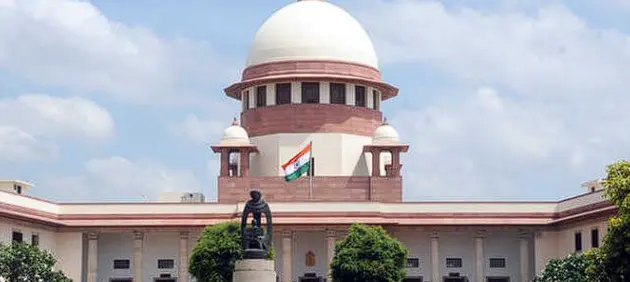
New Delhi: The Supreme Court on Wednesday said it would consider an application seeking recall of its September 23 split verdict on whether petitions challenging the 2023 law on the appointment of the Chief Election Commissioner (CEC) and Election Commissioners (ECs) should be sent to a larger Constitution bench.
On September 23, a two-judge bench comprising Justices Dipankar Datta and Satish Chandra Sharma disagreed on how to handle a group of petitions challenging the 2023 law that bars the Chief Justice of India from the committee responsible for selecting the Chief Election Commissioner (CEC) and Election Commissioners (ECs).
While Justice Datta turned down the government’s request to refer the issue to a larger Constitution bench, Justice Sharma said the matter should be placed before a larger bench.
The recall application was brought up on Wednesday before a three-judge bench led by the Chief Justice of India and including Justices Joymalya Bagchi and V Mohana, with senior advocate Gopal Sankaranarayanan appearing for the petitioners, as reported by NDTV.
According to the plea, Justice Satish Chandra Sharma’s son was working as a lawyer for the Election Commission of India (ECI), but this fact was never revealed during the five hearings held in the case. The application claims this non-disclosure created a suspicion of bias against Justice Sharma.
The petitioners argued that if they had known during the hearings that Justice Sharma’s son was serving as standing counsel for the ECI, they would have asked for his withdrawal from the case.
“We will examine and take a call,” the CJI responded.
When the CJI mentioned that he had come across news of a curative petition being filed in the matter, Sankaranarayanan confirmed it, clarifying that a different party had moved that petition.
This development follows an earlier curative petition filed in the Supreme Court after media reports surfaced stating that Justice Satish Chandra Sharma’s son—who sat on the bench that delivered the split verdict—is the standing counsel for the poll panel before the Madhya Pradesh High Court.
The petition alleged “reasonable apprehension of bias and propriety”, noting that the petitioner only discovered Justice Sharma’s son’s association with the EC’s legal team after the split verdict was pronounced.
It stressed that judicial ethics prohibit a judge from hearing a case where a close family member is acting as counsel for one of the sides.
The plea further maintained that the circumstances meet the Supreme Court’s established standards of “reasonable likelihood of bias” and “real danger test”, and that Justice Sharma’s participation in the bench undermined the validity of the September 23 decision.