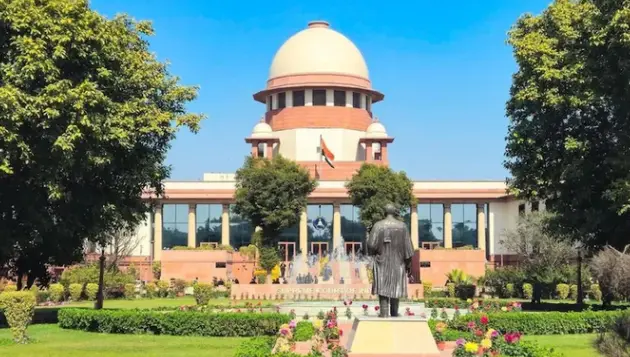
New Delhi: The Supreme Court on Wednesday issued notice to the Delhi Police on fresh bail petitions filed by activists Umar Khalid and Sharjeel Imam in the 2020 northeast Delhi riots conspiracy case. However, the apex court declined to consider their pleas for interim bail at this stage, saying it would hear the prosecution before taking a decision.
A three-judge Bench comprising Chief Justice of India Surya Kant and Justices Joymalya Bagchi and V Mohana took up the matter and sought the Delhi Police’s response.
During the hearing, senior advocate Kapil Sibal, appearing for Umar Khalid, sought interim bail, pointing out that his client had remained in custody for more than six years. Senior advocate Siddharth Dave, representing Sharjeel Imam, also sought similar relief, citing prolonged incarceration.
The Bench, however, declined to entertain the interim relief applications immediately. It directed that the matters be placed before the Chief Justice on the administrative side for the constitution of a three-judge Bench.
The development assumes significance in view of differing judicial interpretations of the law governing bail in cases involving prolonged incarceration under the Unlawful Activities (Prevention) Act (UAPA).
During the proceedings, Sibal referred to a May 22 order in the case of another accused, Tasleem Ahmed, in which the Supreme Court had referred the issue of prolonged detention and bail under the UAPA to a larger Bench while granting interim relief to co-accused.
Solicitor General Tushar Mehta, appearing for the Delhi Police, submitted that the reference arose from the same FIR. Chief Justice Surya Kant also observed that there were differing interpretations of an earlier judgment authored by him in the Union of India versus KA Najeeb case.
The present petitions follow the Delhi High Court’s September 30 decision refusing bail to Khalid and Imam. Both had approached the trial court with fresh bail applications in June, but their pleas were rejected in July.
On January 5, 2026, the Supreme Court had rejected their earlier bail appeals while granting relief to five other accused in the case. The Bench had distinguished their alleged roles in the larger conspiracy and observed that the prosecution material attracted the stringent bail provisions under Section 43D(5) of the UAPA.
However, the court had allowed Khalid and Imam to renew their bail applications after the examination of protected prosecution witnesses or the expiry of one year from the date of the order, whichever was earlier.
Khalid and Imam were arrested in September and August 2020, respectively, in connection with the alleged larger conspiracy behind the communal violence that erupted in northeast Delhi in February that year. The violence, which occurred amid protests against the Citizenship (Amendment) Act (CAA), left 53 people dead and more than 700 injured.
The Delhi Police has alleged that the two activists played key roles in planning and coordinating the conspiracy. Both have contested the allegations and sought bail, citing prolonged incarceration and delays in the trial.
The latest proceedings bring the focus back to the constitutional question of whether prolonged imprisonment of undertrials, particularly in cases involving stringent anti-terror laws, can justify bail when the trial is yet to make substantial progress.
The Supreme Court is expected to take up the matter before a specially constituted three-judge Bench.