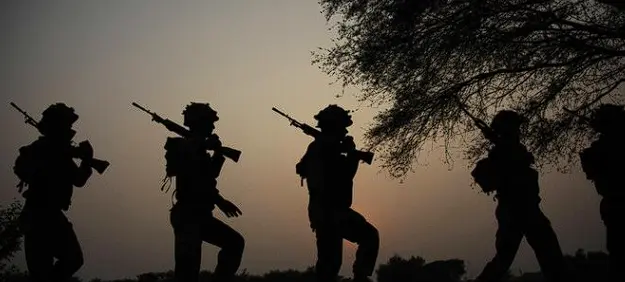
New Delhi: Prime Minister Narendra Modi on Sunday said the 2016 surgical strikes set a “bold new example” of India’s counter-terror policy, showing the world that terror attacks would get a strong and decisive response.
Addressing the nation through his monthly radio dialogue Mann Ki Baat, Modi said India has embraced a stance of zero tolerance towards terrorism and made it clear that any terror strike would be met with a “strong and decisive response”.
Recounting the September 28–29, 2016 mission, he noted that Indian Army units had crossed the Line of Control (LoC) and struck terrorist launch pads in the aftermath of the assault on an Army base in Uri, Jammu and Kashmir.
“The surgical strike presented a bold new example of India’s counter-terrorism policy right in front of the entire world,” Modi said, adding that the operation demonstrated India’s resolve to respond decisively to terrorism.
He observed that India had borne the suffering inflicted by terrorist violence for a prolonged period and termed the surgical strikes a resolute answer to that “agony”.
“India is following the policy of zero tolerance against terrorism,” the Prime Minister asserted.
Modi also appealed to the public to participate in the Census currently underway, terming it a collective national responsibility in which each citizen must contribute. He specifically asked people to make use of the online enumeration option., as reported by The New Indian Express.
Turning to the campaign against drugs, the Prime Minister said young Indians are joining hands to create awareness about the harms of narcotics through the ‘Nasha Mukt Yuva Abhiyan’. He noted that millions of youths have already vowed to keep themselves free from drugs and to persuade others to follow suit.
He also remembered late Vishva Hindu Parishad leader Ashok Singhal on his birth anniversary, highlighting his role in the Ram Janmabhoomi movement. He described Singhal’s life as one that combined ascetic values with active social engagement.