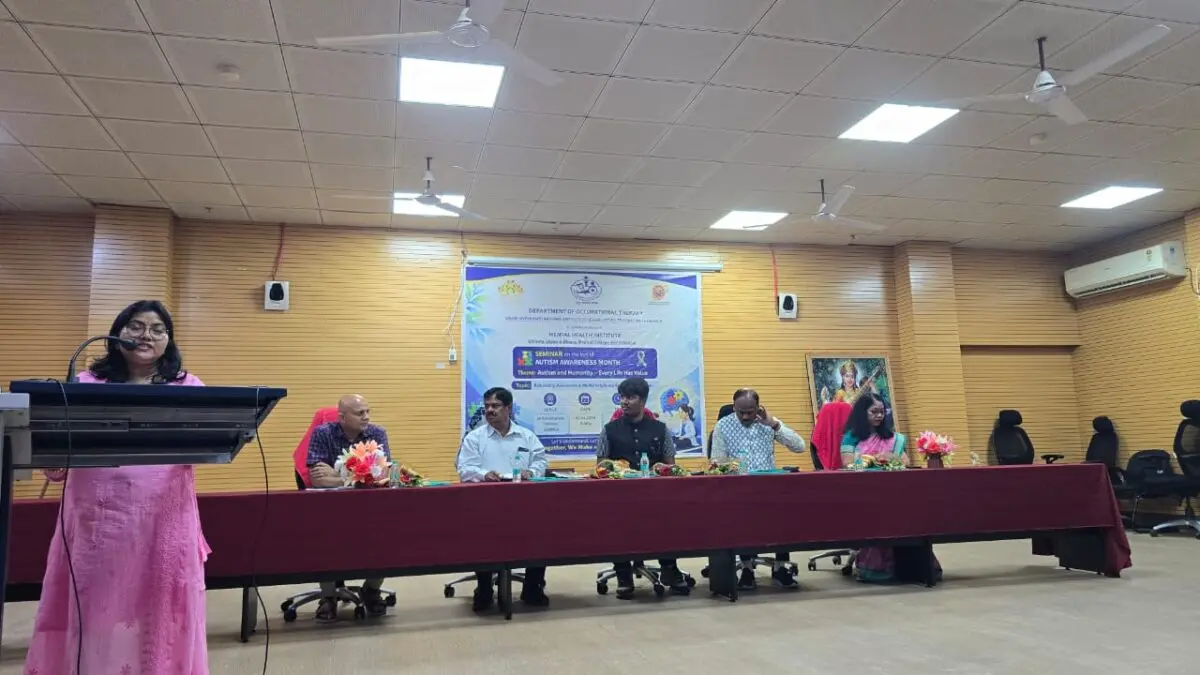
Cuttack: Experts at a special seminar held to observe Autism Awareness Month strongly emphasised the critical need for early identification, greater societal acceptance, and full inclusion of individuals with autism in community life.
The day-long seminar, organised by the Department of Occupational Therapy at Swami Vivekanand National Institute of Rehabilitation Training and Research (SVNIRTAR), Olatpur, in collaboration with the Mental Health Institute (Centre of Excellence) at S C B Medical College and Hospital, aimed to raise awareness, foster inclusion, and promote stronger multidisciplinary support systems for people with autism.
Titled “From Awareness to Acceptance: Supporting Individuals with Autism,” the event brought together professionals and participants to discuss practical ways to improve rehabilitation services and community understanding.
Several resource persons highlighted the importance of interdisciplinary collaboration, increasing public awareness, and strengthening rehabilitation infrastructure to better support autistic individuals.
Chief guest, Sarada Rout, a teenager on the autism spectrum, delivered an inspiring address sharing his personal journey, including the challenges he has faced and overcome. He stressed the transformative power of acceptance, equal opportunities, and self-belief in empowering people with autism. Rout also presented a soulful rendition of mantras, creating a peaceful and motivational atmosphere at the venue.
The seminar was attended by several distinguished guests, including Dr K C Mohapatra, Deputy Director (Technical) of SVNIRTAR; Dr Anurupa Senapati, Head of the Department of Occupational Therapy at SVNIRTAR; Dr Ajay Mishra, Head of the Department of Psychiatry at MHI (COE); and Prof (Dr) Sarada Prasanna Swain from the Department of Psychiatry. Other key contributors from SVNIRTAR included occupational therapists Dr Kshanaprava Mohakud, Dr Abhishek Mohanty, and Dr Ditipriya Sarkar.T
he event saw strong participation, with 125 people attending in person and another 100 joining virtually. Offline participants included professionals from psychiatry, peadiatrics, neurology, psychiatric social work, clinical psychology, and occupational therapy.