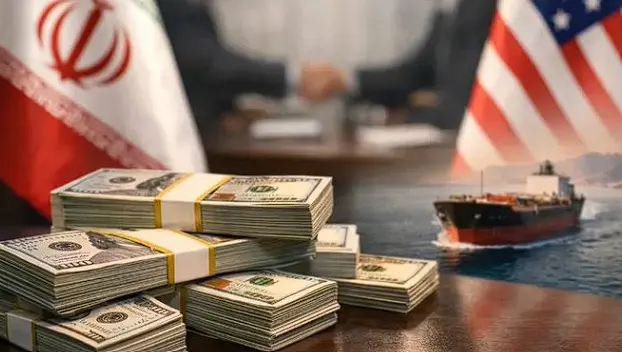
New Delhi: Shortly after US President Donald Trump declared that an agreement with Tehran was “now complete,” officials from Iran and the United States offered conflicting descriptions of a draft memorandum of understanding reportedly under consideration, with the possible release of Iran’s frozen funds becoming a central dispute.
A senior Iranian official, speaking to Reuters, said the draft addressed multiple issues — Tehran’s nuclear programme, reopening the Strait of Hormuz, and waivers on US oil sanctions — and envisaged a 60-day period for final negotiations after both parties endorsed the memorandum. That account also said the draft included provisions on releasing Iran’s frozen assets, as reported by India Today.
Iranian state-linked outlets elaborated on those claims. Mehr New
s Agency quoted Foreign Minister Abbas Araghchi describing talks with the US and saying that Tehran’s frozen financial assets would be freed once a 14-point memorandum was signed. Mehr reported that lifting what it called a US naval blockade topped the document’s list, while Iran’s nuclear dossier would move into a second phase of discussions.
Reports varied on the amounts and timing tied to the frozen funds. The Reuters source said one draft proposed that the United States would release $25 billion of Iran’s frozen assets, through a mix of direct cash transfers, cooperation with regional partners, and financial credit lines. Mehr earlier reported a different figure, claiming the US would make $12 billion available before the final negotiation stage and that the US and its allies would also be expected to submit reconstruction plans totaling at least $300 billion for Iran.
US officials pushed back on the suggestion that Washington had agreed to hand over the money in advance. Axios correspondent Barak Ravid, citing a senior US official and other White House sources, dismissed Iranian media reports that the US would release frozen assets, saying, “This is completely not true. This is a pay-for-performance deal and no frozen funds will be released without the Iranians implementing their commitments.” Ravid added that Iran would not be able to access those funds unconditionally before a 60-day negotiation window began.