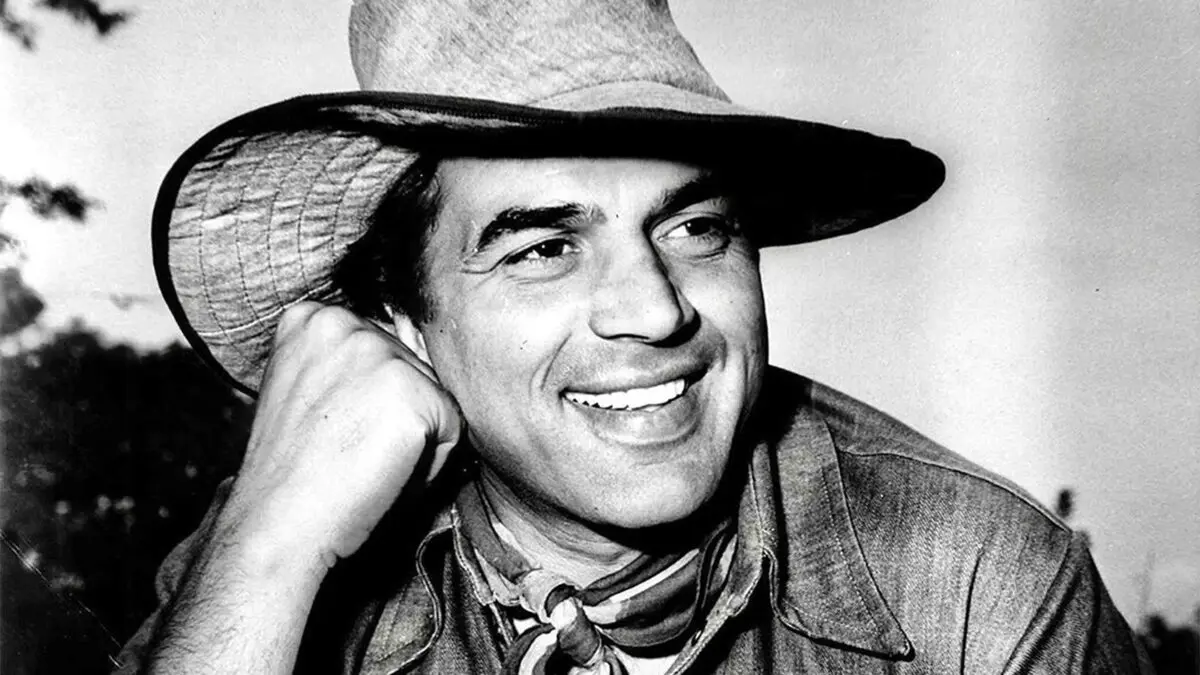
Bhubaneswar: Dharmendra’s death at 89 has closed the chapter on one of Hindi cinema’s most enduring stars — but the most fascinating parts of his story were never on screen. They lived in the shadows: in his private fears, his stubborn hopes, his unpredictable bursts of emotion, and the quiet rituals that defined a man far more layered than any of his 300-plus roles.
The Jump That Defined Him — And The Fear He Hid
One of the most striking memories from Dharmendra’s early career comes from a stunt most actors wouldn’t dare attempt. He once leapt from nearly 40 feet — a dangerous fall even by today’s standards, reported Times Bull. What makes the act extraordinary is what no one knew then: Dharmendra had a deep fear of heights. But he insisted on doing the stunt himself, telling the director that audiences “buy tickets for truth.” Behind the “He-Man” persona was a man who pushed past his own tremors because authenticity mattered more to him than comfort. It was the same streak that made him perform his own action sequences, fight scenes and chase shots even when safety harnesses were unheard of. His courage wasn’t the absence of fear — it was the refusal to bow to it.
Check out: Tribute from one action hero to another:
Growing up, Dharmendra ji was the hero every boy wanted to be…our industry’s original He-Man.
Thank you for inspiring generations.
You’ll live on through your films and the love you spread. Om Shanti 🙏 pic.twitter.com/Vj6OzV20Xz
— Akshay Kumar (@akshaykumar) November 24, 2025
A photograph, a dream, and a talent contest that changed Indian Cinema
Dharmendra’s journey began not with privilege or film lineage, but with a single photograph. According to reports, he clicked a picture with his father’s camera, submitted it to a talent search, and became one among thousands — yet the only one selected. That photograph carried him from a small town in Punjab to the heart of Mumbai’s studios, where he debuted in ‘Dil Bhi Tera Hum Bhi Tere’ and eventually rose into one of the most recognisable faces in Indian cinema.
Every home had a favourite Dharmendra film. He was a part of our growing up and of Indian cinema’s finest years.
He brought strength, charm and honesty to every role, and carried Punjab’s warmth wherever he went.
Behind the fame was a humble, grounded and deeply human soul.… pic.twitter.com/116K0XHuP5
— Yuvraj Singh (@YUVSTRONG12) November 24, 2025
From Garam Dharam to Dharam Paji: Fierce one minute, soft the next
Dharmendra was famous for his warmth on sets, remembered as “Dharam Paaji” by junior crew and veteran alike. Once, at a party, Dharmendra reportedly slapped a drunken Sanjay Khan for disrespecting an elder actor. The room fell silent — this was “Garam Dharam”, the fiercely protective son of the industry, according to a TOI report. Yet when Sanjay Khan suffered severe burns in the Tipu Sultan fire tragedy years later, Dharmendra visited him and “cried like a baby.”
The suits he stitched every year, for an award that never came
Perhaps the most poignant truth about Dharmendra lies in a ritual he followed for decades. Every year, he would stitch new suits, choose matching ties, and wait for the big Bollywood award nights. Every year, he hoped his name would finally be called. But Every year, he returned home empty-handed. Despite silver jubilees, golden jubilees and blockbuster success, he never received the level of formal acting recognition he quietly longed for. “Mujhe nahi mila,” he reportedly said once.
Love, loyalty and a life lived his way
Dharmendra’s personal life was as dramatic as any screenplay.
He remained devoted to his first wife Prakash Kaur, and simultaneously built a life with Hema Malini, their partnership evolving from on-screen chemistry to lifelong companionship. He was the patriarch of one of Bollywood’s most influential film families, guiding the careers of Sunny Deol, Bobby Deol, and later, Esha Deol and Ahana Deol. The legend lives on — not only in the films, but in the unseen moments he carried with him, quietly, all his life.