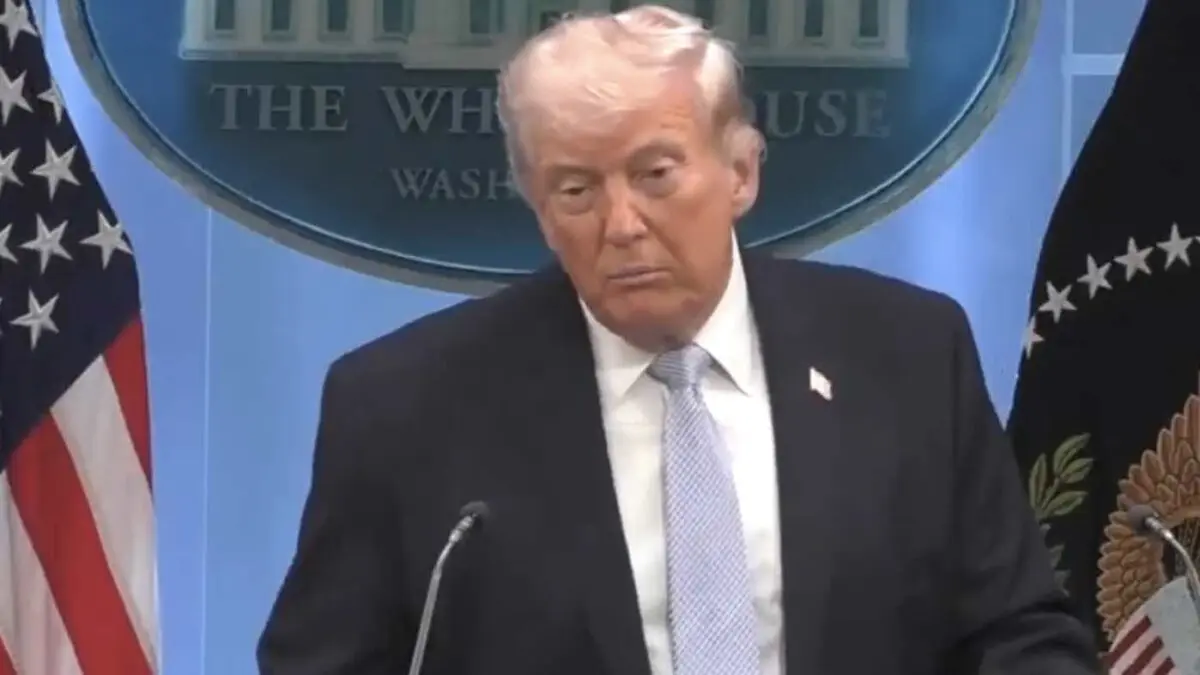
Washington: President Donald Trump’s abrupt reversal from a stark threat to wipe out Iran’s civilization has exposed the clear limits — and growing risks — of his trademark unpredictable negotiating approach, which relies on bold rhetoric and sudden shifts.
Tuesday’s choice to retreat and accept a two-week ceasefire — jeered by detractors as fresh proof of “TACO,” — short for “Trump always chickens out” — represents the sharpest pivot yet away from a 40-day clash roiling the Middle East and roiling world oil trade, Reuters reported.
Trump’s boasts of conquest sideline scrutiny of fusing outsized ultimatums, impulsive language, and ever-harsher warnings.
Escalation to Ceasefire
That morning, he escalated unprecedentedly, tweeting Iran a blunt ultimatum: unless it struck a bargain, “a whole civilization will die tonight, never to be brought back again.”
After teetering on war’s edge—what specialists deem potential war crimes—Trump flipped course within hours, unveiling a Pakistan-brokered truce just shy of his deadline demanding Iran clear the Strait of Hormuz blockade.
He proclaimed US troops had “already met and exceeded all Military objectives.”
Persistent Challenges and Risks
Analysts note Iran remains a persistent challenge for the US. It emerges militarily diminished yet ruled by tougher hardliners who hold sway over the vital oil corridor and safeguard a hidden stockpile of highly enriched uranium.Long billing himself a negotiation titan from real estate roots, Trump risks cornering himself, eroding America’s global trust, some observers contend.
“The president was trapped by his own hyperbole,” said Jon Alterman of the Center for Strategic and International Studies think tank in Washington. “He could not have destroyed Iranian civilization, and the costs of even appearing to try would have been massive.”
This strategy adds further danger, with rivals such as China and Russia potentially figuring it out.
“The surp
rise value is wearing off,” said a Republican lawmaker who had been in contact with the White House on Tuesday night, referring to Trump’s habit of making reversals after tough-sounding threats.
White House Defence and Pattern of Behavior
White House press secretary Karoline Leavitt rejected backdown talk on Wednesday, insisting to reporters his rhetoric embodied “tough negotiating style” and that the world should “take his word very seriously.”
Trump displays a pattern of extreme positions trailed by pullbacks. This includes reversing tariffs amid a $6.5 trillion market drop after his “Liberation Day” announcement, easing penalties on China, and shelving plans to seize Greenland or Gaza. Stocks surged in response each time, including a 2.5% S&P 500 gain post-ceasefire.
Trump has delivered decisively on select second-term warnings. These include a January special forces raid that nabbed Venezuela’s Nicolas Maduro following a hefty US naval presence, and a February 28 strike on Iran alongside Israel—undertaken even as nuclear negotiations persisted.
Questions on Outcomes and Strategic Intent
Doubts persist on core wins, like sealing Iran’s nuclear route. By denying bomb ambitions, Iran retains buried enriched uranium post-June US-Israeli strikes.
Trump aides, though, uphold his erratic approach as a way to unsettle opponents.
“I wouldn’t say he blinked,” said Jonathan Panikoff, a former deputy US intelligence officer for the Middle East now at the Atlantic Council think tank in Washington. “He took Iran to the edge and managed to escape with at least the temporary off-ramp he had been hoping would come.”
Alexander Gray, a former senior official in the first Trump administration and now CEO of the American Global Strategies consultancy, rejected the notion that this had been another example of Trump’s TACO tendency and said the heated rhetoric was instead aimed at “escalating to de-escalate.”
Mark Dubowitz, CEO of the Foundation for the Defense of Democracies, a nonprofit research institute considered hawkish on foreign policy, said he was sympathetic to what he saw as Trump’s view that “you literally have to out-crazy the Iranians,” despite its drawbacks.
“The problem with the Madman Theory of geopolitics is you’re not only going to scare your enemy, but you’re scaring your allies and you’re scaring your people,” Dubowitz said.