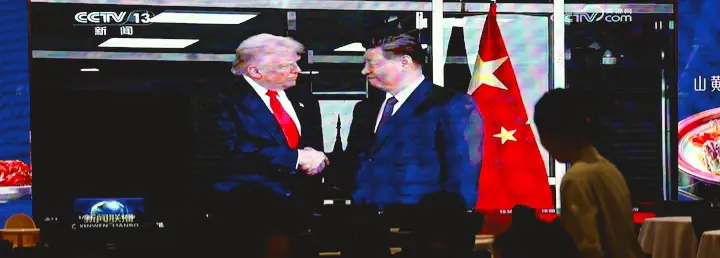
Washington, DC: US president Donald Trump’s upcoming visit to China is influencing his strategic deliberations regarding the Middle East crisis, reports from American media suggest.
An anonymous White House official has been quoted by NBC as saying that the scheduled trip is among the various factors currently being considered by the president as he evaluates his military and diplomatic options.
The visit to Beijing, now slated for May 14 and 15, is viewed as a “priority”, the official said. The trip had been previously pushed back by the United States at the onset of hostilities, and the administration reportedly really does not want to postpone again.
The ongoing dual maritime restrictions on the Strait of Hormuz and various Iranian ports are creating additional hurdle, The New York Times has reported. These logistical and security challenges are reportedly complicating matters in advance of what is being described as a “high-stakes” China visit.
While Beijing has publicly expressed its desire to play a “constructive role” in brokering an end to the war, tensions remain high as the Trump administration continues to enforce sanctions against several Chinese shipping firms and oil refineries, alleging they have been trading in Iranian oil in violation of US law, as reported by ANI.
China and many of its neighbours, rely heavily on oil shipments through the Strait of Hormuz. The energy security of the region remains a critical factor with the vital waterway remaining largely closed since early March. This may impact bilateral talks in Beijing.
Trump has revealed that negotiations with Iran are progressing behind closed doors, against the backdrop of this international pressure. He insisted that only a small circle inside his administration knows the true status of the talks, telling reporters in the Oval Office, “Nobody knows what the talks are, except myself and a couple of other people.”
He acknowledged persistent uncertainty surrounding Iran’s leadership structure, adding, “We have a problem because nobody knows for sure who the leaders are. It’s a little bit of a problem.”
Trump has maintained that Tehran wants an agreement “badly.” He argued that US pressure tactics were severely damaging Iran’s economy, noting, “Their economy is crashing. The blockade is incredible. The power of the blockade is incredible,” in a reference to the US-led blockade of the Strait of Hormuz.
The US president, however, appeared to downplay the prospect of resuming large-scale military strikes against Iran, despite the fragile ceasefire currently in place. “I don’t know that we need it. We might need it,” he said when asked about the possibility of renewed “bombing.”
He is expected to receive updated military options for Iran from Pentagon officials as the administration continues to pressure Tehran into accepting a deal, CNN has reported.
The Republican leader also remains at odds with domestic legislators, criticising repeated congressional efforts to limit his authority to conduct military operations. “They go again and again on the war power,” Trump told reporters, adding, “I’m negotiating a deal with Iran… and every week, every three days, they put in a thing that the war should stop.”
US secretary of war Pete Hegseth defended the administration’s position before the Senate Armed Services Committee, arguing that the current ceasefire pauses the timeline under the 1973 War Powers Resolution.
A president has 60 days from notifying Congress of military action to either end operations or obtain congressional authorisation under the law. That deadline for the Iran conflict is expected to arrive at the end of this week.
“Ultimately, I would defer to the White House and the White House counsel on that; however, we are in a ceasefire right now, which our understanding means the 60-day clock pauses or stops in a ceasefire,” Hegseth said during testimony, according to CNN.
This interpretation has met significant resistance from the opposition.