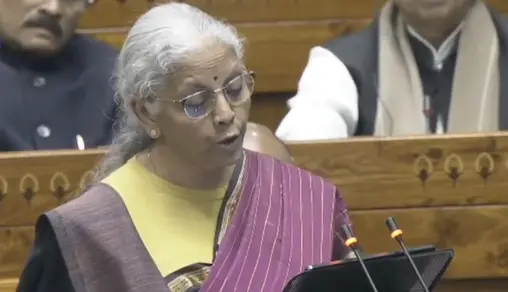
New Delhi: Finance Minister Nirmala Sitharaman’s Union Budget 2026 has rolled out a series of infrastructure, tourism, and agriculture-focused initiatives for poll-bound West Bengal, Tamil Nadu, Assam, and Kerala.
While avoiding overt populism, it emphasised on sustainable development, connectivity, and regional growth to address local needs and potentially influence voter sentiments in these states.
West Bengal
A standout announcement is the high-speed rail corridor connecting Siliguri in northern Bengal with Varanasi in Uttar Pradesh, positioning the state as a key growth connector in eastern India. Additionally, a new dedicated freight corridor from Dankuni near Kolkata to Surat in Gujarat is set to promote eco-friendly cargo movement and boost trade logistics.
The budget also earmarks funds for an integrated East Coast Industrial Corridor with a major node at Durgapur, aiming to enhance manufacturing and employment opportunities.
On the tourism front, West Bengal is included in the creation of five new destinations under the Purvodaya scheme for eastern states, alongside provisions for 4,000 electric buses to improve urban mobility and reduce emissions.
Tamil Nadu
For Tamil Nadu, ruled by the DMK, the budget highlighted connectivity and resource utilisation. Two high-speed rail corridors — Hyderabad-Chennai and Chennai-Bengaluru — will link the state to major tech hubs, fostering economic integration and faster travel.
The state will also benefit from dedicated Rare Earth Corridors, spanning Tamil Nadu, Odisha, Andhra Pradesh, and Kerala, to promote mining, processing, and manufacturing of critical minerals essential for electronics and renewable energy.
Agriculture gets a boost through the Coconut Promotion Scheme, which includes replacing old trees with high-yield varieties, and dedicated programmes for cashew and cocoa to achieve self-reliance and enhance exports by 2030. Sandalwood cultivation will also
be promoted in partnership with the state government.
Tourism initiatives include ecologically sustainable mountain trail will be created in Tamil Nadu’s Pothigai Malai.
Additinally, an outlay of Rs 20,000 crore over five years will strengthen infrastructure in Tier 2 and 3 cities, including temple towns.
Assam
Assam, where the BJP holds power, the budget prioritises cultural and health sectors. A new scheme for developing Buddhist circuits, covering Arunachal Pradesh, Sikkim, Assam, Mizoram, Tripura and Manipur, will strengthen heritage conservation and promote religious tourism in the Northeast.
Healthcare sees the upgradation of the National Mental MCN Institutes in Tezpur as regional apex institutes. “There are no national institutes for mental healthcare in North India. We will therefore set up a NIMHANS 2.0 and also upgrade National Mental Health Institutes in Ranchi and Tezpur as regional apex institutions,” Sithraman said.
Infrastructure support includes Rs 20,000 crore for Tier 2 and 3 cities.
In agriculture, initiatives for Agar tree cultivation in hilly areas aim to create local jobs and value chains.
Kerala
Kerala, under Left Democratic Front rule, benefits from eco-focused and agricultural announcements. Dedicated Rare Earth Corridors will facilitate critical mineral development, similar to Tamil Nadu.
Tourism gets a lift with turtle trails along key coastal nesting sites to promote sustainable wildlife viewing.
Agricultural schemes mirror those in Tamil Nadu, including the Coconut Promotion Scheme, cashew and cocoa programmes, and sandalwood cultivation support.
Healthcare includes one of three new All-India Institutes for Ayurveda in the state.
Other announcements
Amid Centre’s renewed focus on Tier II and Tier III cities with populations exceeding 5 lakh, which have expanded to become growth centres, the Finance Minister announced creation of City Economic Regions (CERs), designed to harness the agglomeration benefits of urban clusters by mapping regions around their unique growth drivers, with a proposed allocation of Rs 5,000 crore per region over five years.
Sitharaman also proposed to set up Mega Textile Parks in challenge mode.
Opposition leaders in these states, however, have criticised the measures as insufficient, calling for more direct funding.