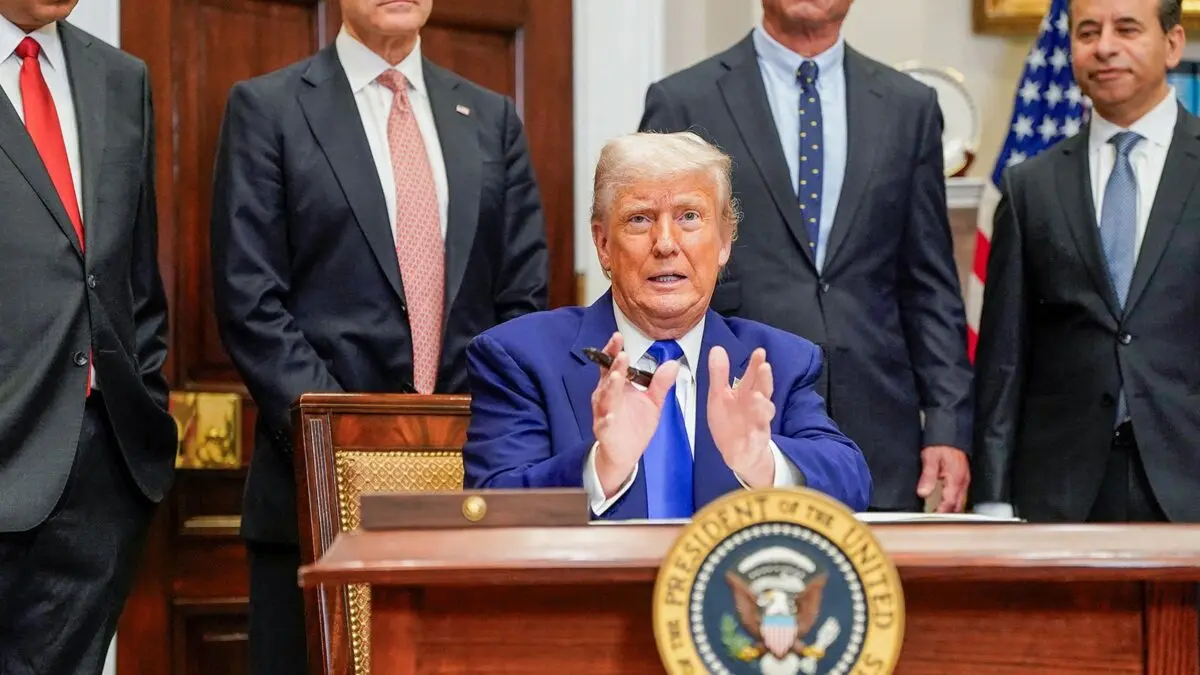
Washington, D.C: The United States federal government officially shut down at midnight after Congress and the White House failed to reach an agreement on how to extend federal funding. President Donald Trump had told reporters on Tuesday that a shutdown seemed likely. Republicans and Democrats remained locked in a bitter dispute over health care funding and broader spending priorities.
According to media reports, the shutdown would be different from the past closures as Trump had threatened to lay off more federal workers if lawmakers did not pass legislation. However, the administration has not made clear what cuts to expect, reported the Economic Times.
“We will be looking for opportunities” to reduce the size of the federal government, said White House budget director Russ Vought.
Senate vote fails, impasse persists
The Senate vote ended 55–45 against the proposed stopgap measure. Senate GOP Leader John Thune suggested lawmakers could revisit the issue later in the week, but acknowledged no breakthrough was at hand.
Accusations fly as stakes rise
Senate Democratic Leader Chuck Schumer accused Republicans of “bullying” Democrats by refusing to negotiate on health care subsidies and other legislative priorities. “Republicans have until midnight tonight to get serious with us,” Schumer warned after a White House meeting yielded no breakthrough.
President Donald Trump, rather than moderating his stance, escalated the confrontation by threatening to lay off hundreds of federal employees if the shutdown proceeds. He claimed, “We’ll be laying off a lot of people. They’re going to be Democrats.”
Already, over 150,000 federal employees are set to depart via a voluntary buyout program this week — the largest such exit in 80 years. Tens of thousands more have reportedly been dismissed earlier this year. Some agencies even circulated internal memos blaming Democrats for the shutdown — a departure from the usual practice of shielding public servants from overt partisan messaging.
Who will work, who will be furloughed
Essential personnel — military, air traffic controllers, border agents — will remain on the job, but without pay until a resolution is reached.
Programs like Social Security payments and Medicare claims will continue.
Other departments will issue furlough notices widely. The Education Department expects to furlough nearly 90% of its staff.
The EPA will curtail pollution cleanup efforts. The Small Business Administration may stop issuing loans.
The Labor Department’s monthly unemployment report, a key economic indicator, may be delayed or suspended.
Public institutions such as the Smithsonian museums and the National Zoo will shut their doors. National parks may lock gates or operate under skeletal staffing.
The Supplemental Nutrition Assistance Program, which is US’ largest food aid program, and the Special Supplemental Nutrition Program for Women, Infants and Children, known as WIC, would continue operations during a shutdown, states a planning document published by the US Department of Agriculture.
Agents at the FBI, the Drug Enforcement Administration, Coast Guard and other federal law enforcement agencies would remain on the job. Immigration and border agencies such as ICE and CBP would continue its normal operations.
Courts are expected to remain open. However, federal courts may be forced to quickly curtail operations.
The health care dispute at the core
At the heart of the standoff is health care. Democrats insist any spending legislation must include an extension of subsidies under the Affordable Care Act that are due to expire at year’s end. Without such protections, premiums could spike for about 24 million Americans, especially in Republican-led states like Texas and Florida.
Republicans counter that Democrats are holding the budget hostage ahead of the 2026 midterms. Senate GOP Leader Thune said the “far left’s determination to oppose everything President Trump has said or done is not a good reason to subject the American people to the pain of a government shutdown.”
A recurring crisis
This is not Trump’s first shutdown confrontation. In 2018, his insistence on border wall funding triggered a 35-day closure, the longest in US history. The country has experienced 15 federal shutdowns since 1981, most lasting only a few days.
As tensions rise and the clock ticks toward midnight, federal employees, American families, and the broader economy brace for the fallout of a possible shutdown