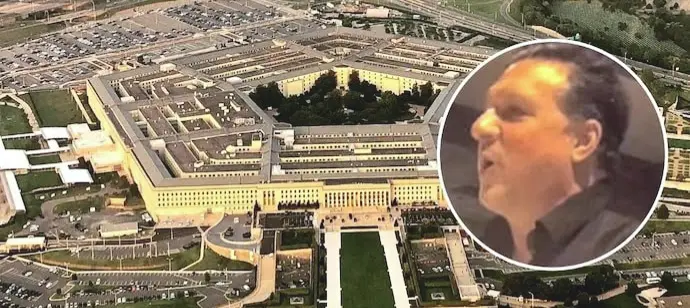
Washington, DC: A senior US military official, responsible for nuclear and chemical safety, has been placed on administrative leave after a covertly recorded video surfaced online, allegedly showing him sharing sensitive national security details with a stranger.
The post with the video, by James O’Keefe, says: “Top U.S. Nuclear Chief Caught LEAKING Sensitive National Security Information to Stranger, Reveals Army Chemist Was Exposed to US Chemical Nerve Agent, Confirms US Strike Killed Children in Iran, Discloses US Plans to ‘Kill Iran’s New Supreme Leader’.”
In the video, Andrew Hugg, identified as a Chief of Chemical Nuclear Surety, apparently speaks candidly about classified matters during a conversation in a restaurant.
Hugg allegedly discussed US military operations, including remarks suggesting that American airstrikes in Iran had resulted in civilian casualties, which he described as “collateral damage”, according to the footage and accompanying claims, as reported by Republic TV.
He also purportedly spoke about internal processes around nuclear decision-making and asserted that the US has no intention of deploying nuclear weapons in current conflicts.
Hugg made controversial comments about potential US action against Iran’s leadership, including a remark interpreted as suggesting that Mojtaba Khamenei could be targeted if he “doesn’t change his ways”, the video further alleges.
The authenticity and full context of these remarks have not been independently verified.
Hugg is also heard stating that the US still maintains chemical nerve agents and referencing an incident in which an Army chemist was allegedly exposed to such a substance, in another claim from the recording.
If confirmed, these assertions could raise serious concerns, given international conventions on chemical weapons.
The controversy has been acknowledged by the US Army, with spokesperson Cynthia O Smith saying: “We have placed Mr. Hugg on administrative leave while we conduct a thorough investigation into this matter.”
The accuracy of the claims made in the video have not yet been confirmed by officials. Neither has it been clarified whether any classified information was actually compromised. The incident has, however, triggered scrutiny over operational security protocols and the vulnerability of personnel to so-called “honeytrap” tactics, where individuals are manipulated into divulging sensitive information.
While the Pentagon has not issued a detailed comment on the specifics of the allegations, the episode, if substantiated, could have diplomatic ramifications, particularly given already heightened tensions between the United States and Iran.