Washington: The Trump administration announced that Israel and Lebanon have reached an agreement to implement a ceasefire, a step aimed at removing a major obstacle to broader talks to end the war with Iran.
A US State Department joint statement said the truce depends on Hezbollah, the Iran‑aligned militia, fully stopping fire and pulling all its fighters out of southern Lebanon. The statement added that the sides agreed to set up “pilot zones” where the Lebanese armed forces “will take exclusive control of the territory to the exclusion of all non‑state actors”.
Hezbollah Not Party To Talks
Hezbollah, which did not take part in the Washington negotiations, told AFP on Tuesday that the group would “not accept a partial ceasefire”. The group has not been a formal participant in the talks between Lebanese and Israeli officials.
A truce due to come into effect on 17 April failed to hold, and fighting has continued, with each side accusing the other of violations. The Washington meetings marked the fourth round of direct talks between Israeli and Lebanese diplomats since hostilities flared on 2 March, when Hezbollah resumed strikes against Israel in a show of support for Iran.
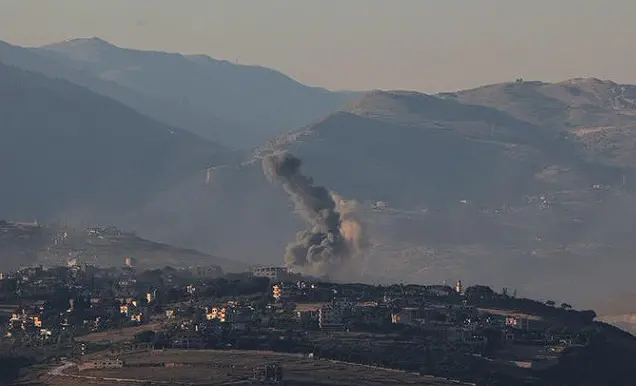
The announcement followed renewed exchanges on Wednesday: Hezbollah said it struck Israeli troops, and Israeli strikes in southern Lebanon killed at least nine people.
Pilot Zones Agreed
Earlier on Wednesday, President Donald Trump said he wanted negotiations on Lebanon to be handled separately from talks on Iran, while Tehran maintains the two conflicts are linked and has warned it may suspend peace negotiations with the US in protest at Israel’s offensive in Lebanon. Iran’s stance risks undermining the broader negotiations with Washington.
Trump said on Monday that he had stopped an imminent Israeli strike o
n Beirut and had spoken to Netanyahu and representatives of Hezbollah who agreed that “all shooting will stop”. Trump also confirmed reports that he had described Netanyahu as “crazy”, adding he was “a little bit perturbed” that Israel’s campaign against Hezbollah in Lebanon was complicating US‑led efforts to advance peace talks with Iran.
Analysts say Israel is trying to weaken Hezbollah before any Iran deal would limit its options. Netanyahu told CNBC on Wednesday that he and Trump agree on disarming Hezbollah to secure peace with Lebanon.
Political Pressure On US
The Trump administration faces mounting domestic pressure to resolve the Iran war, as higher energy prices and economic uncertainty threaten Republican fortunes ahead of the midterm elections and disrupt global trade. On Wednesday, the US House of Representatives dealt a rebuke to the president by backing a measure to force him to seek congressional approval for the war or withdraw US forces — a move seen largely as symbolic because its legal force is unclear even if passed by the Senate.
Human Cost & Strikes
Among the Israeli strikes on Wednesday was one near the public hospital in Tebnine, occurring days after attacks adjacent to the Hiram and Jabal Amel hospitals in Tyre. The strike beside Jabal Amel on Monday killed four people and injured 127 — most of them medical staff. Lebanon’s state‑run National News Agency reported strikes on more than 20 sites in the south, some following Israeli warnings for villagers to evacuate.
The Lebanese health ministry said an Israeli strike elsewhere in the south hit an ambulance, killing two paramedics from the Risala Scouts Association, which is affiliated with Hezbollah’s ally the Amal movement.
Wider Regional Attacks
Elsewhere on Wednesday, Iran struck Kuwait, killing one person, damaging the airport and injuring dozens, while the US military carried out strikes near the Strait of Hormuz. Those incidents have further strained an already fragile détente among the US, Israel and Iran and pushed oil prices up nearly 2%, with the strait remaining largely closed more than three months after the war began.
Iran’s elite Revolutionary Guards denied firing at Kuwait’s airport and blamed the damage on US interceptor missiles that failed to destroy their targets, according to Iranian state media. The US military disputed that account, saying Iranian drones deliberately targeted the airport.