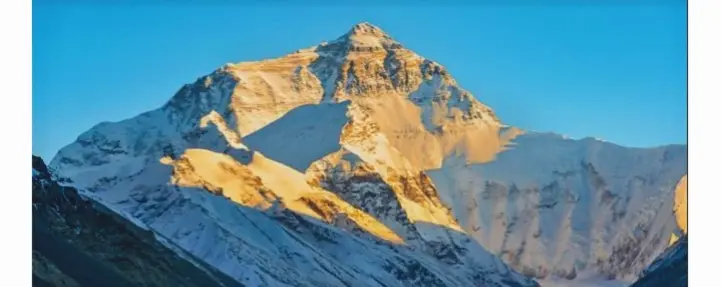
Kathmandu: Expeditions to Mt Everest have been rocked by a multi-million dollar ‘Rescue Scam’. There were more than 300 fake helicopter rescues between 2022 and 2025, leading to fraudulent insurance claims worth nearly $20 million, the Nepal Police have said.
Authorities have registered 33 cases, including those related to organised crime. The New York Times reported in February that six people have been arrested Nepal in connection with the elaborate rescue racket in which climbers were evacuated unnecessarily from Everest and other Himalayan peaks.
All the accused are Nepali nationals and held managerial or senior roles in three Kathmandu-based mountain rescue agencies. They were arrested following a four-month investigation by the Central Investigation Bureau (CIB).
The Kathmandu Post reported how rescue agencies routinely pressured foreign climbers to request helicopter evacuations for minor illnesses that could have been treated on site. In many cases, no evacuation was required at all. Yet climbers were convinced that their lives were in danger and that immediate airlift was the only option, as reported by NDTV.
The agencies falsified passenger manifests and medical reports, often in collusion with private hospitals in Kathmandu, allowing them to extract large sums from international insurance companies for rescues that were unnecessary or entirely fabricated, authorities said.
A rescue agency billed insurers for four separate helicopter evacuations, even though all four climbers were flown out in a single helicopter, in one instance.
Fake rescues were triggered in two main ways, the CIB has said. One involved trekkers who simply did not want to walk back after completing strenuous routes such as the Everest Base Camp trek. Guides would suggest pretending to be ill and would handle all evacuation formalities.
It was the second method that was extremely disturbing. At altitudes above 3,000 metres, mild symptoms of altitude sickness, such as headaches or low oxygen levels, are common and usually manageable with
rest or descent.
It was unearthed by investigators that guides and hotel staff were trained to scare tourists, telling them they could die unless evacuated immediately. In some cases, Diamox tablets were administered alongside excessive water intake to deliberately worsen symptoms.
In at least one documented case, baking powder was mixed into food to make tourists physically unwell, The Kathmandu Post reported.
The financial fraud escalated, once a helicopter rescue was initiated. A single helicopter often carried multiple climbers, but insurance companies were billed separately for each passenger, as if individual flights had been chartered. A flight costing about $4,000 could result in an insurance claim of $12,000 or more.
Fake flight manifests, load sheets, and hospital records were created. Some hospitals prepared discharge summaries using digital signatures of senior doctors who were never involved in treatment. In certain cases, these records were created without the doctors’ knowledge.
During the investigation, it was revealed that hospital admission records were generated for tourists who were reportedly drinking beer in hospital cafeterias.
The scam was sustained by an elaborate commission system. Hospitals paid 20% to 25% of insurance payouts to trekking companies and another 20% to 25% to helicopter operators, the police said.
While trekking guides benefited from inflated invoices, in some cases, tourists themselves were offered cash incentives to participate in the scheme.
According to the probe, 4,782 foreign patients were treated at hospitals linked to the racket between 2022 and 2025. Of these, 171 cases were confirmed as fake rescues.
In one case, four tourists were rescued on the same helicopter, on the same day, using the same manifest. Insurers were billed separately, resulting in claims of $31,100, plus a hospital bill of $11,890.
Nepal recently opened the Spring 2026 Mt Everest climbing season. Officials expect nearly 500 climbers to attempt Everest this season, while thousands more will trek to base camp. Teams of “icefall doctors” have already begun fixing ropes and ladders along the dangerous Khumbu Icefall route.
The scam has resulted in stricter regulations for climbers and trekkers. Nepal has introduced a streamlined permit process and new reporting requirements. All rescue operations must now be formally reported to the Department of Tourism and the Tourist Police.