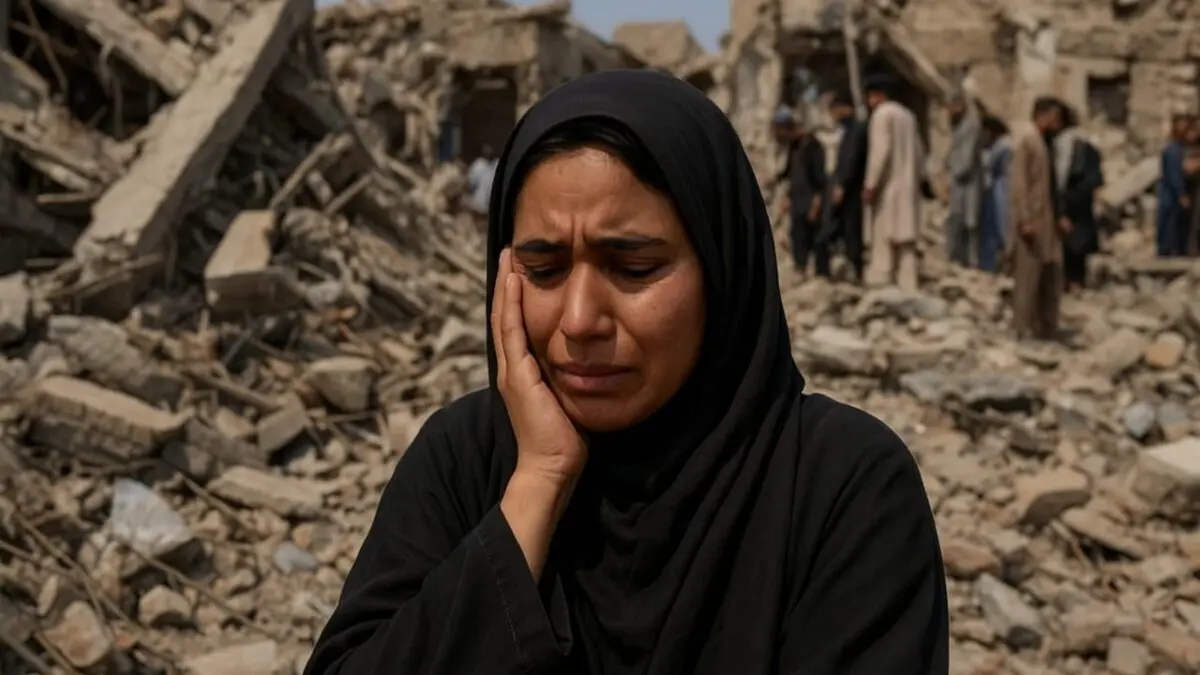
Kabul: The World Health Organization (WHO) has urged the Taliban to ease restrictions on female aid workers in Afghanistan after a powerful earthquake killed more than 2,200 people and injured over 3,600 in the country’s eastern region. The 6.0 magnitude quake that struck on September 1 has left thousands homeless and in urgent need of medical and humanitarian support.
WHO officials warned that gender-based restrictions were hampering rescue and relief efforts, particularly for women who are culturally unable to be treated by male medical staff. Current rules in Taliban-controlled areas require female workers to travel with a male guardian and prohibit physical contact between male rescuers and women, complicating emergency care.
“A very big issue now is the increasing paucity of female staff in these places,” said Dr. Mukta Sharma, deputy representative of WHO’s Afghanistan office, as quoted by Reuters. She pointed out that nearly 90 per cent of medical personnel in the affected regions are men, with only about 10 per cent being women, mostly midwives or nurses. The shortage of female doctors, she said, is making it difficult to provide critical trauma care to injured women.
The restrictions have also led to distressing situations during rescue operations. “No one offered the women help, asked what they needed or even approached them,” a 19-year-old survivor from Kunar Province, Aysha, told Hindustan Times. Another volunteer, Tahzeebullah Muhazeb, described to NDTV how “it felt like women were invisible… the men and children were treated first, but the women were sitting apart, waiting for care.” He added that bodies were sometimes dragged by their clothing to avoid physical contact.
The WHO has stressed that the lack of female medical staff is linked to wider Taliban restrictions on women’s education and employment, which prevent new generations of female doctors from being trained. Aid workers say this is leaving many Afghan women without access to essential healthcare.
The crisis is worsened by funding cuts that have already forced the closure of around 80 health facilities this year, while 16 health posts in the affected areas were damaged by the earthquake, according to Reuters. The WHO also raised concerns about rising trauma among women who lost male family members and called for more female mental health professionals to be allowed to work in the field.
International agencies continue to press the Taliban for formal exemptions to allow women aid workers to operate freely, but so far, restrictions remain in place. The WHO has warned that without urgent action, thousands of Afghan women in quake-hit areas risk being left without life-saving medical attention.