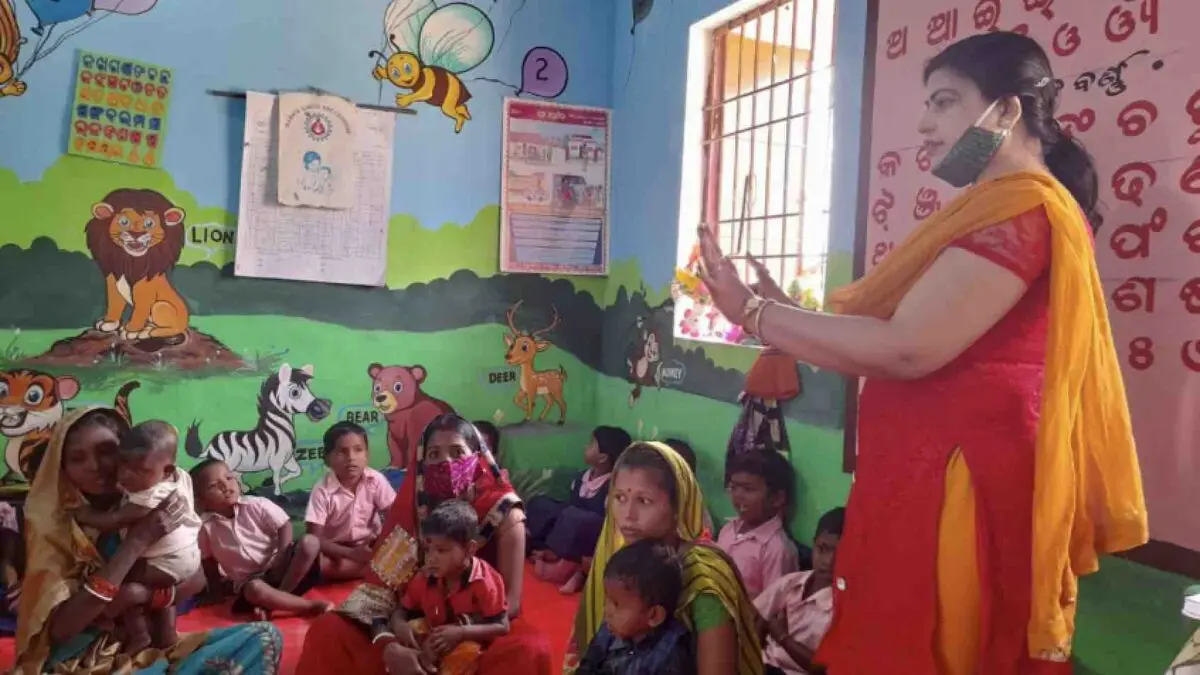
Bhubaneswar: In a significant step towards enhancing community ownership and accountability, the Odisha government has directed the formation of all-women Anganwadi Management Committees (AMCs) in every Anganwadi Centre across the state by July 31.
The Women and Child Development Department has instructed all district collectors to constitute the committees under the Saksham Anganwadi and Poshan 2.0 programme. The move aims to strengthen grassroots participation, transparency, and effective monitoring of essential services including nutrition supplementation, pre-school education, immunisation, health check-ups, and support for pregnant women, lactating mothers, and young children.
Each eight-member AMC will be chaired by the concerned Anganwadi Supervisor, with the Anganwadi Worker serving as Member-Convenor. Members will include mothers of enrolled children (aged 3-6 years), the local ASHA worker, a representative from self-help groups (or a local NGO/CSO if needed), and a woman teacher from a nearby government primary school. In a state-specific addition to the Centre’s guidelines, the committees will also include an adolescent girl from the locality, pursuing higher secondary or college education, and a beneficiary of Subhadra Scheme (excluding SHG
members) to ensure broader representation of young women and direct beneficiaries.
“The objective is to ensure that women from the community take ownership of the functioning of Anganwadi centres and actively participate in monitoring the quality of services being delivered,” a department official said.
The committees will meet at the Anganwadi Centre once every two months. Minutes of the meetings, along with decisions taken, must be documented and submitted to the Child Development Project Officer (CDPO) within seven days.
The CDPOs have been tasked with reviewing the performance of these committees at least twice a year, evaluating parameters such as meeting regularity, attendance, community participation, follow-up actions on issues raised, and overall service delivery.
The AMCs have been assigned wide-ranging responsibilities, including reviewing infrastructure and sanitation, monitoring the quality of supplementary nutrition and food, tracking child growth, identifying and referring cases of malnutrition, conducting household surveys, promoting kitchen gardens (Poshan Vatikas), organising awareness campaigns on maternal and child health, and facilitating grievance redressal. They will also promote better coordination among various stakeholders, including health, education, Panchayati Raj institutions, urban local bodies, and self-help groups.
With the constitution of these new bodies, the existing Anganwadi Level Monitoring and Support Committees (ALMSCs) will be discontinued, as the AMCs will now serve as the primary community-level mechanism for monitoring, feedback, and participatory governance of Anganwadi services.
The initiative aligns with guidelines issued by the Union Ministry of Women and Child Development under Mission Saksham Anganwadi and Poshan 2.0, which stress community ownership to make Anganwadi services more responsive, effective, and accountable.