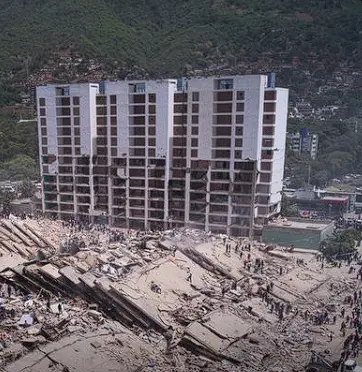
Caracas: A 4.9-magnitude tremor rattled Venezuela’s northern coast on Friday afternoon, days after two powerful earthquakes levelled buildings and left at least 920 people dead, Reuters reported.
Residents in Caracas and Maracay reported feeling the later quake, which the European-Mediterranean Seismological Centre (EMSC) recorded as magnitude 4.9. The new shock came as desperate search teams and local volunteers continued to comb through rubble for survivors following Wednesday’s twin quakes.
Authorities reported that 172 people remained trapped, with 920 confirmed dead and 3,360 injured after the back-to-back temblors struck parts of Caracas and nearby areas late on Wednesday. More than 50,000 people have been listed as missing in the aftermath of the two quakes, which measured 7.2 and 7.5 on the Richter-like scale used by some agencies.
The US Geological Survey warned the casualty count could r
ise sharply, saying fatalities might top 10,000. International crews and aid were only beginning to reach the worst-hit zones nearly 48 hours after the disasters, while locals and first responders continued frantic efforts to free survivors.
Relief operations have been uneven, particularly in La Guaira state, where towns remain without sufficient heavy machinery and official presence. Frustrated residents and volunteers have been digging by hand through collapsed structures, calling for cranes and other equipment to remove concrete slabs.
A UN assessment put direct economic losses from the two quakes at about $6.7 billion. The second quake — at magnitude 7.5 — was described as Venezuela’s most powerful earthquake in more than a century.
Interior Minister Diosdado Cabello announced restrictions on access to some of the worst-hit areas in La Guaira, Al Jazeera reported, as authorities aimed to control movement amid the continuing rescue efforts.
Local communities have mobilised to gather supplies and hunt for missing relatives, sometimes converting private vehicles into makeshift ambulances. Social media access, loosened by the government after it was restricted following the disputed 2024 presidential election, has helped people share information about loved ones.
“It’s the community that has managed to get people out alive,” said 25-year-old Jennifer Palacios, whose six-year-old son and five other relatives remain trapped beneath rubble. “We need them to bring cranes to move the slabs. There are still people trapped.”