Brahmapur: A nearly 200-year-old architectural treasure of the Ghumusar Bhanja dynasty at Podapada village in Odisha’s Kandhamala district is facing an uncertain future, with its exquisite wooden carvings and heritage artefacts removed to make way for a modern brick-and-cement temple.
The historic Narasimha Mandap, located about eight km from Phiringia under Phiringia block, is an outstanding example of traditional wooden craftsmanship and an important centre of Lord Narasimha worship. Believed to have been built in the late 18th or early 19th century by the 57th Bhanja ruler, Srikara Bhanja, the structure bears testimony to the dynasty’s rich artistic legacy.
Like the famous Biranchi Narayan Temple at Buguda, popularly known as the ‘Wooden Konark’, and the Raghunath Temple at Natagaon in Ganjam district, the Podapada mandap was entirely constructed of wood and adorned with intricate carvings.
Its wooden pillars, arches and ornamental panels feature exquisite designs of lotus flowers, creepers, birds and animals, including peacocks, swans, parrots, lions, tigers and elephants. A seven-headed serpent is depicted sheltering the wooden mask of Lord Narasimha.
The mandap once housed the Narasimha Purana Gadi, a palm-leaf manuscript composed by Bipra Pitambar, placed inside an intricately carved wooden Bimana. The shrine attracted devotees, tourists, researchers, historians and art lovers from different parts of the country and abroad.
According to the priest, Lingaraj Nanda, devotees from Kandhamala and neighbouring districts visit the shrine seeking divine intervention in personal, family and social problems. There is a strong local belief that prayers and offerings of milk and water help people recover lost or stolen belongings. The shrine is also regarded as an important centre of Tantric worship.
The Ghumusar Bhanja rulers, who governed the region for more than 1,000 years, are credited with establishing numerous temples, monasteries and 22 Brahmin settlements. Historical accounts also attribute the construction of more than 250 Vishnu temples to the dynasty.
The tradition of Narasimha worship remains deeply rooted in the region through folk performances such as ‘Raja Nata’ and ‘Prahlad Nataka’. Several Narasimha shrines, locally known as ‘Narasimha Ghudis’, are also found in Phiringia and Khajuripada blocks.
However, the historic Podapada mandap has suffered neglect, said a Researcher Dr Chittaranjan Mishra, who is also the Principal of Panchayat Junior College, Phiringia. Two beautifully carved wooden doors, decorated with lotus designs and ancient silver coins, were reportedly stolen by miscreants a few years ago. The removal of the remaining wooden artefacts for the construction of a modern temple has further raised concerns over the preservation of this invaluable heritage.
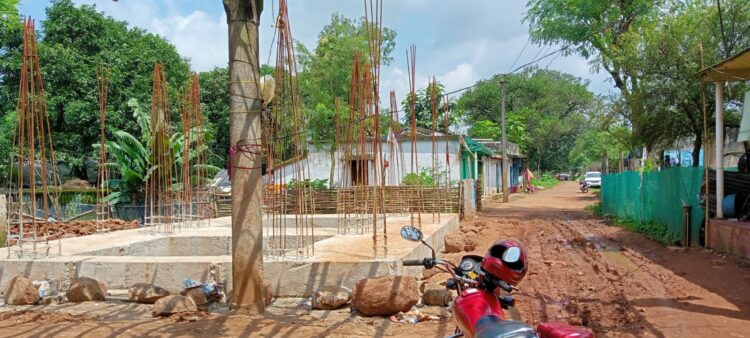
Locals and heritage enthusiasts believe that the district administration and the Archaeology Department should intervene immediately to protect the surviving artefacts and restore the mandap to its original glory.
They feel that proper conservation and promotion could transform this little-known village into an important heritage tourism destination in Kandhamala district.