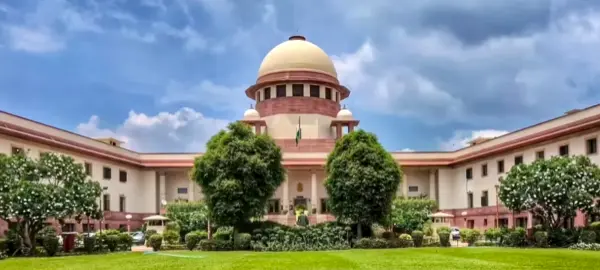
New Delhi: In a judgement that will have an impact across the country, the Supreme Court ruled on Friday that advocates trying to enter the subordinate judiciary will not longer need to have three years experience at the Bar.
Those with one year’s experience at the bar can apply. After being appointed, they will undergo a year’s training at the state’s judicial academy and another year of supervised clerkship, before handling cases.
The Court declined to revisit its fundamental conclusion that future judges should have some familiarity with the functioning of courts, but held that such exposure need not come explicitly from practice at the Bar.
The bench passed a 2:1 verdict in favour of the change with Chief Justice of India (CJI) Surya Kant and Justice A G Masih saying that “a judicial service which demands adequate maturity and practical exposure must also remain sufficiently attractive to the most capable young lawyers”, warning that overly burdensome entry requirements could discourage precisely the candidates the rule seeks to attract.
Justice K Vinod Chandran, in his dissenting opinion, said that the original three-year practice at the Bar requirement should remain untouched. Law graduates “steeped in academics” should first have “a feel of the affairs of man and the travails of a litigant before deciding their destinies”, he said.
The Supreme Court, in 1993, had made the three-year Bar experience mandatory across the country.
In 2022, it did away with this requirement, allowing fresh law graduates to enter the judicial service examination process immediately after passing out.
The Supreme Court reversed course in 2025, bringing back the three-year experiencw clause and saying that “for the last 20 years during which the recruitment of fresh law graduates as judicial officers without a single day of practice at the Bar has been permitted, the said endeavour has not been a successful experience”.
On Friday, the Supreme Court retained its central conclusion that law grads should have some exposure to the functioning of courts before entering judicial services. It said a civil judge, from the first day on the bench, deals with questions involving “life, liberty, property and personal rights”.
Exposure to courts before taking up that role helps develop “judicial temperament, patience, empathy, courtroom discipline and an appreciation of the respective roles of the Bench and the Bar,” the Court held, as reported by The Indian Express.
The Court also said that practical exposure can be acquired through “a combination of professional and institutional experience” including judicial training and supervised clerkships.
For those in the transition period – that is, from May 20, 2025 to March 31, 2027 – the graduates would be deemed to have completed one year of practice without needing a certificate. Candidates selected during this period will then undergo one year of training as a “training judicial officer” at the State Judicial Academy and one year of supervised clerkship, both of which will count towards the three-year requirement.
From April 2027 onwards, candidates must have at least one year of actual practice before appearing for examination, certified under a mechanism that is prescribed by the High Courts. Even then, the successful candidates must complete the same one-year academy training and one-year clerkship programme before taking up regular judicial duties.