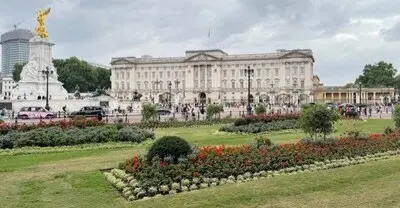
London: Buckingham Palace will not longer be the permanent residence of British monarchy. King Charles III has announced that he will not make the palace his permanent residence after its extensive refurbishment is completed in early 2027.
This brings an end to a royal tradition that has defined the British monarchy for nearly two centuries.
King Charles and Queen Camilla will continue to occupy Clarence House, the London residence they have occupied for years, even after the £369 million restoration project concludes in March 2027, timesnow.in reported.
While Buckingham Palace will remain the monarchy’s official headquarters and the centrepiece of state ceremonies, it will no longer serve as the sovereign’s principal home.
The change reflects both practical considerations and a broader effort to make the landmark more accessible to the public, palace officials said.
The move does not diminish Buckingham Palace’s constitutional importance, they said. They described it as an evolution in how the monarchy uses one of Britain’s most recognisable buildings while preserving its historic role.
While King Charles will continue residing at Clarence House, Buckingham Palace will remain the principal venue for official royal business. State banquets, diplomatic receptions, investiture ceremonies, audiences with the Prime Minister
and annual garden parties will continue to be held at the palace.
The King’s Treasurer and Keeper of the Privy Purse, James Chalmers, said Buckingham Palace would continue serving as the operational heart of the monarchy.
“It is and will remain monarchy HQ, the crown jewel of our national buildings, with the sovereign’s standard flying proudly from the roof whenever His Majesty is in London,” Chalmers told reporters.
The King will retain private accommodation inside the palace for occasional overnight stays when official duties require him to remain there, officials said.
Around 700,000 people currently visit the State Rooms each year during seasonal openings, and royal officials believe wider access will strengthen the palace’s role as one of Britain’s most significant public heritage sites.
The decision is expected to expand visitor access to Buckingham Palace once refurbishment is complete.
Neither King Charles nor the late Queen Elizabeth II has spent a night at Buckingham Palace since 2019 because of the ongoing refurbishment works.
Renovation of the palace started in 2017. The primary focus was on replacing ageing electrical wiring, plumbing, heating systems and other essential infrastructure that had remained largely unchanged for around six decades. Without the works, the palace faced increasing risks from electrical faults, fire hazards and ageing utilities, officials had repeatedly warned.
King Charles brought about several changes after ascending the throne. He became the first British monarch to publicly disclose the amount of tax he pays.
The King voluntarily paid £12.9 million in tax during 2024-25, followed by £11.7 million in 2025-26. Palace officials said he has now paid more than £30 million in taxes since ascending the throne in 2022.
While British monarchs are exempt from paying income, capital gains and inheritance taxes under law, Charles has continued the voluntary arrangement introduced by Queen Elizabeth II in 1993.