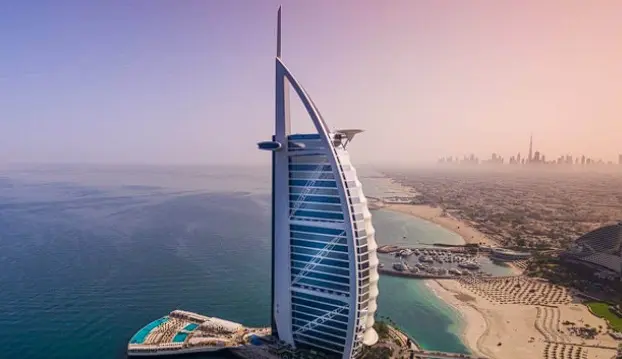
Dubai: Imagine the Arabian Gulf horizon at dusk, where a radiant white sail rises from the waves—a fixture on postcards and ads that has shaped Dubai’s image for a generation. Far beyond its striking profile, Burj Al Arab marked a turning point in the 1990s, launching the emirate into the realm of global luxury and signalling its bold emergence on the world stage. This enduring icon captures Dubai’s ascent, embodying an ambition that refuses to fade, as reported by Khaleej Times.
With its 18-month restoration and closure now underway, it’s the perfect juncture to uncover the engineering triumphs, risky innovations, and visionary details that forged this 1990s dream into one of the city’s most unforgettable landmarks—let’s dive into 10 lesser-known facets that reveal its hidden magic, starting from the waves below.
Seabed Foundation
Long before the sail took shape, engineers first forged an artificial island 280 meters offshore from Jumeirah Beach. This man-made foundation, secured by hundreds of concrete piles into the seabed and shielded by a honeycomb wave-barrier, required three years—outlasting the tower’s own construction. From this stable perch, the structure’s exterior ingenuity unfolds.
Ethereal Lantern
Up close, the sail reveals itself as a sophisticated double-layer of Teflon-coated fibreglass, built to withstand salt, sand, and time. Illuminated from inside, it becomes a ethereal lantern by night, and its surface even projects vibrant displays for national celebrations, sports events, and promotions. Yet this dazzle hints at the lavish interiors awaiting within.
Gilded Opulence
Inside, opulence reigns with more than 1,000 square meters of 24-carat gold leaf gilding columns, cornices, elevator areas, and intricate trims—cementing the hotel’s legendary “seven-star” status well ahead of social media hype. Such extravagance extended even to guests’ tech amenities.
Gold-Plated Digital Concierges
Check-ins once included a lavish touch: 24-carat gold-plated iPads handed to guests as digital concierges. Loaded with apps for spa bookings, room service, hotel info, and butler calls, they were available for purchase as keepsakes. Complementing this were the floors that whispered tales of artistry underfoot.
Stone Symphony
Public areas dazzle underfoot and along walls with nearly 30 marble and stone varieties, among them premier Statuario marble from Italy — the same revered in Michelangelo’s masterpieces — forming a rich tapestry of hues and patterns. This elegance flows into dining experiences that play tricks on the senses.
Aqua Illusion
The famed underwater restaurant delivers a mesmerizing experience through a million-liter seawater tank encircling the space with pressure-resistant acrylic walls. Clever lighting, faux corals, and live fish craft a deep-sea illusion, powered by robust pumps, filters, and supports behind the scenes. Comfort, too, received equally indulgent attention.
Restful Choices
Elevating rest to art, the hotel offers guests a choice of about 17 specialized pillows, ranging from memory foam and orthopaedic designs to tailored options for those who sleep hot. This bespoke luxury shapes the accommodations themselves.
Palatial Levels
Unlike typical high-rises, every one of its 202 suites spans two levels like private villas, slashing room numbers while amplifying palatial exclusivity. The pinnacle Royal Suite boasts a dedicated elevator, cinema, and that quintessential 1990s revolving bed, now woven into hotel folklore. High above, another feature stole the spotlight.
Aerial Extravaganzas
The helipad, hovering over 200 metres above the sea, began as a stylish VIP landing spot but evolved into a spectacle venue. It staged Roger Federer and Andre Agassi’s tennis showdown, Tiger Woods’ golf drives, Formula 1 drifts, and daring feats like a Polish pilot’s plane landing — turning the tower into a worldwide media magnet. At the core lies the space that defines its drama.
Vertical Expanse
The sail’s V-shaped concrete wings frame a breath taking void: the hotel’s vast atrium. Gazing upward reveals a 180-metre chasm of vibrant balconies and weaving escalators, placing you right in the heart of those structural arms.
Burj Al Arab’s 1999 launch crowned Dubai’s entry into luxury travel supremacy, a trailblazer later surpassed by feats like Burj Khalifa and the Museum of the Future — yet none rival its snap-to-mind global allure. During this restoration, whether playful relics like the rotating bed stay as hallowed quirks or adapt to contemporary elegance, remains to be seen.