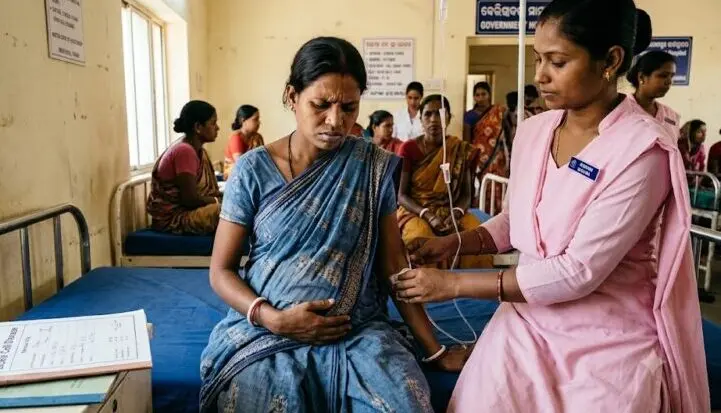
Bhubaneswar: Odisha has become the first state in the country to roll out a dedicated protocol for the management of pregnant women suffering from sickle cell disease (SCD), a move aimed at reducing maternal mortality.
The protocol provides clinical guidelines and clearly defined responsibilities for healthcare providers at different levels.
It was developed jointly by experts from state medical colleges, National Health Mission (NHM), Health Directorate and UNICEF Odisha, recognising the heightened health risks associated with sickle cell disease during pregnancy and the need for timely medical intervention, according to a statement issued by the Health and Family Welfare Department.
The framework was highlighted at a one-day State-Level Review-Cum-Dissemination Workshop on “Sickle Cell Disease during Pregnancy” held in the city on Thursday. The workshop was jointly organised by NHM Odisha, the Directorate of Blood Safety and UNICEF Odisha.
The workshop reviewed the implementation of the Sickle Cell Anaemia Elimination Programme and sensitised district public health officers and assistant managers (non-communicable diseases) from 21-high burden districts on the new protocol. NHM officials, health administrators and development partners participated in the event.
Odisha continues to lead the country in sickle cell screening and detection efforts. The new protocol seeks to strengthen maternal healthcare by ensuring systematic management, timely treatment and coordinated follow-up for pregnant women affected by the disease.
The workshop was inaugurated by NHM Mission Director (In-charge) Harish Chandra Nayak, Director of Blood Safety and Public Health Sanjay Kumar Mohapatra, Director of Family Welfare Bishnu Prasad Mohapatra and UNICEF Odisha health specialist Meena Som, among other officials.
Technical sessions reviewed screening, treatment, follow-up services, transportation benefits and new initiatives planned for the current year.
The workshop concluded with the formulation of a joint action plan to ensure effective implementation of the protocol at the district level, strengthening coordinated care for pregnant women living with sickle cell disease.