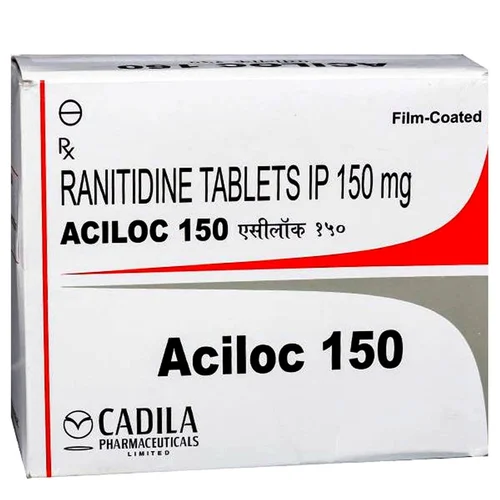
New Delhi: Ranitidine, a commonly used medicine for acidity in India, is under the scanner.
The Central Drugs Standard Control Organisation (CDSCO) has directed drug regulators of all states and Union Territories to ensure that manufacturers of Ranitidine monitor NDMA levels, a potentially cancer-causing impurity, in the active pharmaceutical ingredient (API) and formulations of the drug.
As a precautionary step, CDSCO has also suggested reducing the shelf life.
The move comes from Drugs Controller General of India (DCGI) Dr Rajeev Singh Raghuvanshi, the head of CDSCO, following a recommendation by the Drugs Technical Advisory Board (DTAB) during its meeting on April 28.
A report submitted by an expert committee to study impurity concerns around Ranitidine was reviewed by DTAB, which called for a larger committee to examine all aspects of the issue, including storage conditions that may contribute to NDMA formation.
DTAB also recommended a study be conducted by the Indian Council of Medical Research (ICMR) to further assess long-term safety of Ranitidine in light of NDMA presence.
Manufacturers have been told to adopt risk-based measures, like limiting shelf life, modifying storage recommendations and enhancing NDMA testing protocols across their supply chains.
“Ranitidine falls in the Group 2A carcinogen category, according to the International Agency for Research on Cancer (IARC), which implies that it is a probable human carcinogen. It should not be continued in prescription when there are safer alternatives such as Famotidine and Pantoprazole available,” NDTV quoted AIIMS Delhi oncologist Dr Abhishek Shankar as saying.
Presence of NDMA, which has been classified as a probable human carcinogen, in medicines has led to global regulatory scrutiny in recent years.
Ranitidine, commonly prescribed for acid reflux and ulcers, was withdrawn from the US and several other countries after alarmingly high levels of NDMA were found in some samples.