Stockholm/New Delhi: India became the world’s fifth-largest military spender in 2025, spending USD 92.1 billion on defence, according to the Stockholm International Peace Research Institute (SIPRI) Yearbook 2026.
The SIPRI Yearbook 2026, released on Monday, said India’s military spending increased by 8.9 per cent from the previous year, placing it behind the United States, China, Russia and Germany. Globally, military expenditure reached a record USD 2.9 trillion in 2025, SIPRI said, with the top 15 spenders accounting for roughly 80 percent of that total.
SIPRI estimated India’s nuclear arsenal at about 190 warheads as of January 2026, up from 180 the year before. The institute said India continued modernising its strategic forces and prioritising longer-range capabilities intended to strengthen deterrence against China while still factoring Pakistan into planning.
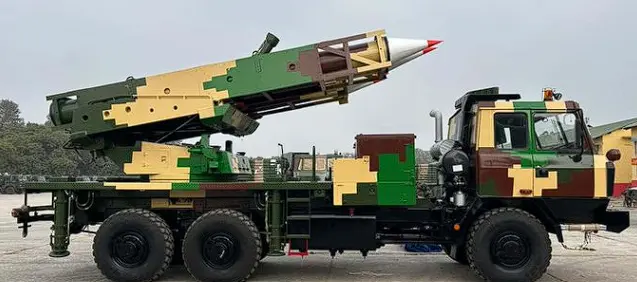
SIPRI highlighted developments across India’s triad — land, air and sea — including progress on MIRV-related technologies and canisterised missile systems, and continued work on Agni-series missiles and newer platforms such as Agni-P.
India’s INS Arihant submarines and submarine-launched missiles (K-15, K-4) aim to give India a reliable second-strike option; bigger systems like the K-5 are being developed.
>Tensions With Pakistan & New Risks
SIPRI called the May 2025 India–Pakistan clash an unusually serious crisis. The two countries exchanged heavy cross-border fire between May 7 and May 10, and both used cyberattacks alongside their military actions. SIPRI says both sides avoided a wider war, but the episode showed that nuclear crises can be unpredictable.
Global Trends & Concerns
Worldwide, SIPRI estimated about 12,187 nuclear weapons across nine recognised nuclear-armed states at the start of 2026, with roughly 9,745 in military stockpiles and about 4,012 deployed on missiles and aircraft.
Although overall numbers continue to decline largely because the United States and Russia are dismantling retired warheads, SIPRI warned that modernisation and expansion by many states could reverse that trend.
Nuclear Reliance Raises Miscalculation Risk
SIPRI warned that growing reliance on nuclear weapons in national defence strategies raises the risk of dangerous miscalculation.
Director Karim Haggag said some leaders treat nuclear arms as a sure shield, but making security policies more dependent on them would increase nuclear dangers. He added that faster, more advanced weapons, weakening arms-control agreements, and rising geopolitical tensions all raise the stakes, and that the May 2025 India–Pakistan crisis showed limits to traditional deterrence thinking.
SIPRI says countries are becoming less open about their nuclear weapons, and talks to manage crises are getting weaker. Researcher Matt Korda warned this makes nuclear emergencies harder to foresee. The report also says that over the past 20 years, the way the world handles conflicts has shifted from cooperative peacemaking to more transactional, power-based approaches. Even though the number of countries in armed conflict fell slightly (from 50 to 49 in 2025), big violent conflicts still continue in several regions.