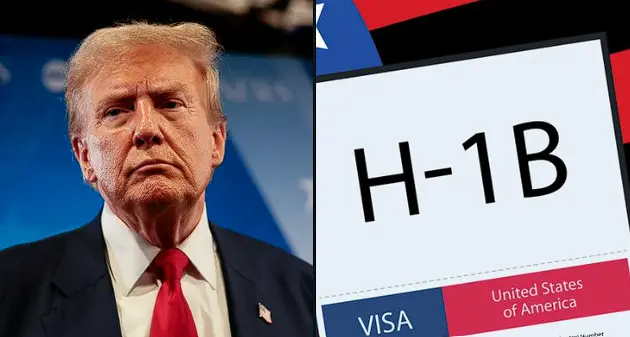
Washington: Indian diaspora groups welcomed a federal court ruling in Massachusetts that struck down a USD 100,000 fee on H‑1B visa applications, saying the decision restores fairness to the employment-based immigration system and helps protect the United States’ competitiveness in innovation and entrepreneurship, PTI reported.
Leaders of US-based Indian diaspora organizations responded positively to the ruling, noting that the removal of the fee will bring predictability for applicants and employers who rely on the H‑1B programme.
Khanderao Kand, chief of policy and strategy at the Foundation for India and Indian Diaspora Studies (FIIDS), said that the court’s decision was appropriate for preserving America’s competitive edge in fields such as technology,
healthcare, and advanced manufacturing.
He added that access to highly skilled global talent remains essential for continued growth in those sectors, and that major policy changes should be rooted in statutory authority and economic realities. FIIDS, Kand said, supports a balanced, merit-based immigration framework that strengthens US businesses and the wider economy.
Sanjeev Joshipura, executive director of Indiaspora, expressed relief at the immediate effect of the order but urged caution about what may follow.
He warned that, although the fee was struck down on legal grounds, the executive branch could still create procedural obstacles for H‑1B applicants through administrative measures that do not explicitly violate the law. Joshipura’s comment reflected concerns about potential nonlegislative changes that could complicate the visa process even without a new statutory fee.
The ruling stems from a challenge to a September proclamation by President Donald Trump that had added a USD 100,000 fee for new H‑1B applications. On Monday, the federal judge concluded the fee was unlawful because it lacked congressional approval, effectively invalidating the additional charge.
Advocates for the diaspora said the court’s decision restores predictability and fairness to the employment‑based immigration system and reinforces the principle that significant policy shifts require proper legislative backing.