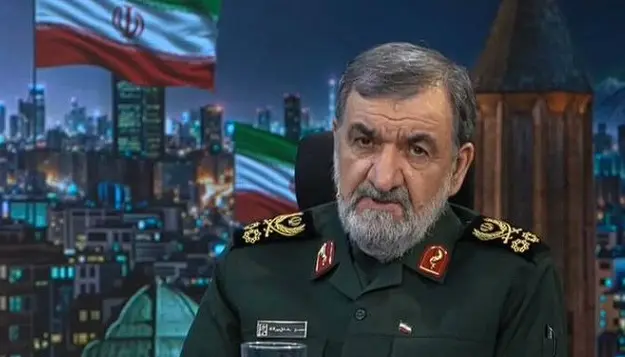
Tehran: Mohsen Rezaei, a senior military adviser to Supreme Leader Ayatollah Mojtaba Khamenei, told CNN that Tehran has won its “first” military victory in the Islamic Republic’s 47‑year history and warned the United States would “enter into a dark corridor” if fighting resumes, ANI reported.
Rezaei said recent battlefield shifts have strengthened Iran’s bargaining position with Washington and put one demand at the centre of talks: the release of USD 24 billion in frozen Iranian assets. Sources say Tehran wants the money in two stages — USD 12 billion after an interim pact and another USD 12 billion later.
Rezaei argued unfreezing the funds would show genuine US intent to make a deal. “The negotiations are at a deadlock and Trump must break this deadlock,” he told CNN, adding, “The ball is in Trump’s court. If he (Trump) wants to reach an agreement w
ith Iran, this $24 billion is a test of trust that Iran wants to have with Trump – this is a test that America must pass and the path will be opened,” he said. “This is our own money, not America’s money.”
Against a fragile ceasefire and stalled talks, Rezaei warned that renewed bombing would widen the conflict beyond the Persian Gulf. “We will give another dimension to the war by attacking these other American bases that we have been attacking so far,” he said.
He said possible escalation could stretch from the Strait of Hormuz to the Indian Ocean, the Bab al‑Mandeb Strait, the Red Sea, and the Mediterranean. Still, he called the chance of full-scale war low: “The possibility of war is low,” and insisted Iran is ready if talks collapse. “Then the world will understand Iran’s true capabilities, because our land power is many times greater than our missiles,” he asserted.
Rezaei dismissed talk of a meeting between US President Donald Trump and Iran’s Supreme Leader, saying it is unlikely now because “we are in the first stage of negotiations and Trump has brought the negotiations to a standstill. This will not happen.”
On the Strait of Hormuz, he repeated Iran’s claim of shared sovereignty with Oman and said both countries should jointly manage the waterway, proposing fees for safe passage. He also expressed doubt that a lasting nuclear deal is possible under Trump, citing America’s past withdrawal from the 2015 agreement and what he called an “ambiguous” US approach to current talks.