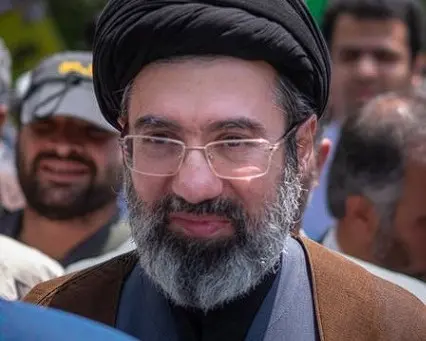
Tehran: Iran’s Supreme Leader Mojtaba Khamenei said on Thursday that the nation will resolutely shield its nuclear and missile programmes as vital national treasures, even as US President Donald Trump continues to press for a deal to rein in Tehran’s key military pursuits, AP reported.
Delivering his message through a comprehensive written text aired on Iranian state TV, Mojtaba highlighted Iran’s advances in science, technology and defence — spanning nanotechnology, biotechnology, nuclear power and missile technology — as essential elements of the people’s sense of identity and independence.
“Ninety million proud and honourable Iranians inside and outside the country regard all of Iran’s identity-based, spiritual, human, scientific, industrial and technological capacities — from nanotechnology and biotechnology to nuclear and missile capabilities — as national assets, and will protect them just as they protect the country’s waters, land and airspace,” the leader declared.
In the document, he claimed the US has endured a ‘disgraceful defeat,’ according to AFP.
Mojtaba’s assertions come as Washington has been ramping up pressure for diplomacy, targeting Iran’s nuclear ambitions and missile operations, amid persistent friction between the adversaries.
Since succeeding his father Ayatollah Ali Khamenei, who was killed in Israel-US joint strikes on February 28, Mojtaba has relied on such scripted addresses broadcast via state outlets.
‘Gulf, Hormuz enter new phase’
Mojtaba coupled his defence stance with observations of a “new chapter” or “new phase” emerging in the Persian Gulf and the pivotal Strait of Hormuz, triggered by clashes pitting Iran against the United States and Israel.
He portrayed these changes as signs of waning Western dominance and growing regional independence.
“The bright future of the Persian Gulf region will be a future without America, one serving the progress, comfort and prosperity of its people,” he said.
Mojtaba underscored mutual stakes linking Gulf states and those bordering the Gulf of Oman, portraying them as forgers of a unified path forward.
“We and our neighbours across the waters of the Persian Gulf and the Gulf of Oman share a common destiny,” he noted, rejecting any rightful role for outside interveners.
US presence gets stark warning
Mojtaba unleashed pointed barbs at distant military and political intruders in the Gulf, motivated by “greed and malice,” declaring them extraneous to the region’s destiny.
He escalated by stating that the only fitting spot for Americans in the Persian Gulf was “at the bottom of its waters,” heightening bellicose language during prolonged strains.
The Strait of Hormuz, a narrow but critical waterway through which 20% of the world’s oil is transported, stays a hotspot of strategic rivalry, with Iran wielding influence over the chokepoint.
Wider West Asia tensions
Mojtaba’s words will echo through a turbulent West Asia landscape, where nuclear diplomacy intersects with surging political and armed confrontations.
They bolster internal narratives of resilience and autonomy, while projecting unyielding resistance to foreign demands on Iran’s defences and regional aims.
With negotiations and intense geopolitical manoeuvring playing out on multiple fronts, the Gulf region remains at the heart of an expanding contest between Iran, the United States, and their respective allies.