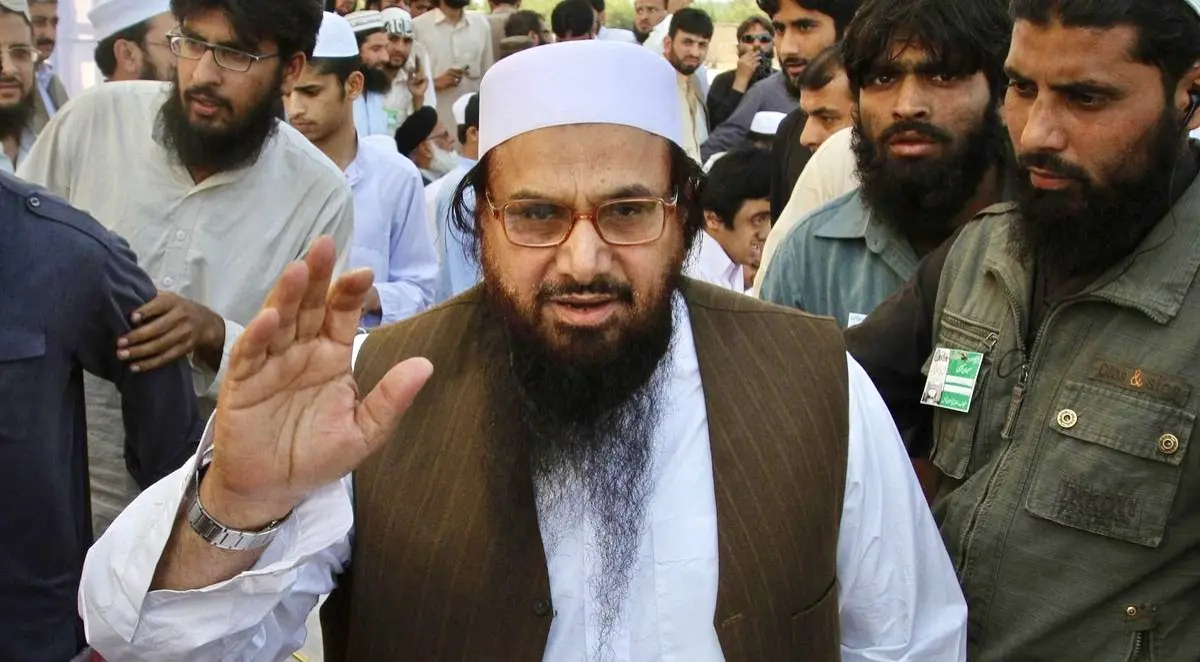
Jammu: Pakistan-based terrorist and Lashkar-e-Taiba (LeT) chief Hafiz Saeed has been named by the National Investigation Agency (NIA) as an accused in the Pahalgam massacre.
He was named in a supplementary chargesheet filed by the agency. Saeed has been charged in his individual capacity as well as in his role as the LeT chief and its proxy organisation, The Resistance Front (TRF).
The supplementary chargesheet was filed before the NIA special court in Jammu in continuation of the agency’s original 1,597-page chargesheet, as reported by The Times of India.
The document details Pakistan’s alleged conspiracy, Saeed’s role and the evidence collected during the investigation through scientific analysis and on-ground examination, the NIA said, invoking various provisions of the Bharatiya Nyaya Sanhita (BNS), 2023 and the Unlawful Activities (Prevention) Act (UAPA), 1967.
The UN-designated terrorist, among the most wanted in India, has also been charged with waging war against India and hatching a conspiracy from across the border.
The original chargesheet, filed in December last year, had named LeT/TRF among seven accused. The investigators established the involvement of LeT/TRF after tracing the origin of two messages poste
d on TRF’s digital platforms — one claiming responsibility for the attack shortly after it took place and another later denying involvement — to Pakistan.
Top Lashkar handler Sajid Jatt, three Pakistani terrorists identified as Faisal Jatt alias Suleman Shah, Habeeb Tahir alias Jibran and Abu Hamza, along with arrested Kashmiri locals Parvaiz Ahmad and Bashir Ahmad Jothad, who allegedly provided shelter to the attackers before the assault, were named in the earlier chargesheet.
The terror attack took place in the picturesque Baisaran meadows of Pahalgam on April 22, 2025. Terrorists gunned down 25 male tourists in front of their families after ascertaining their religion. The 26th victim was a local ponywalla.
The gruesome attack triggered a major national security response and a wider investigation into cross-border terror networks.
On May 7, India launched Operation Sindoor, carrying out coordinated tri-services strikes on nine terror-linked sites across Pakistan and Pakistan-occupied Jammu and Kashmir.
Despite the Indian government telling Pakistan that the strikes were “focused, measured and non-escalatory”, with only terror infrastructure targeted, Islamabad launched missiles and armed drones against civilian and military targets across the border.
Diplomatic ties between the two countries also deteriorated with India placing the Indus Waters Treaty in abeyance and suspending visa services for Pakistani nationals.
After intercepting the Pakistani missiles and drones, India launched precision strikes on air bases across the border, forcing Islamabad to its knees. The hostilities finally ended on May 10 after Pakistan’s Director General of Military Operations (DGMO) called up his Indian counterpart and pleaded for a ceasefire.
The NIA is continuing its investigation into the wider conspiracy and terror network behind the Pahalgam attack.